4000 BC ~ Thames Track
Thames track, which follows the route that is now the A13, is the earliest track through Essex. Archaeological evidence of the oldest settlements of modern humans has been found along this path.
1000 BC ~ The Great East Road
The Great East Road, the second oldest road in Essex, similar to the route of the A12. The Romans paved the road and called it Iter IX. The river crossing was a ford, and the Saxon word for broad was 'rom' - therefore Romford.
900 BC ~ Havering Hoard deposited
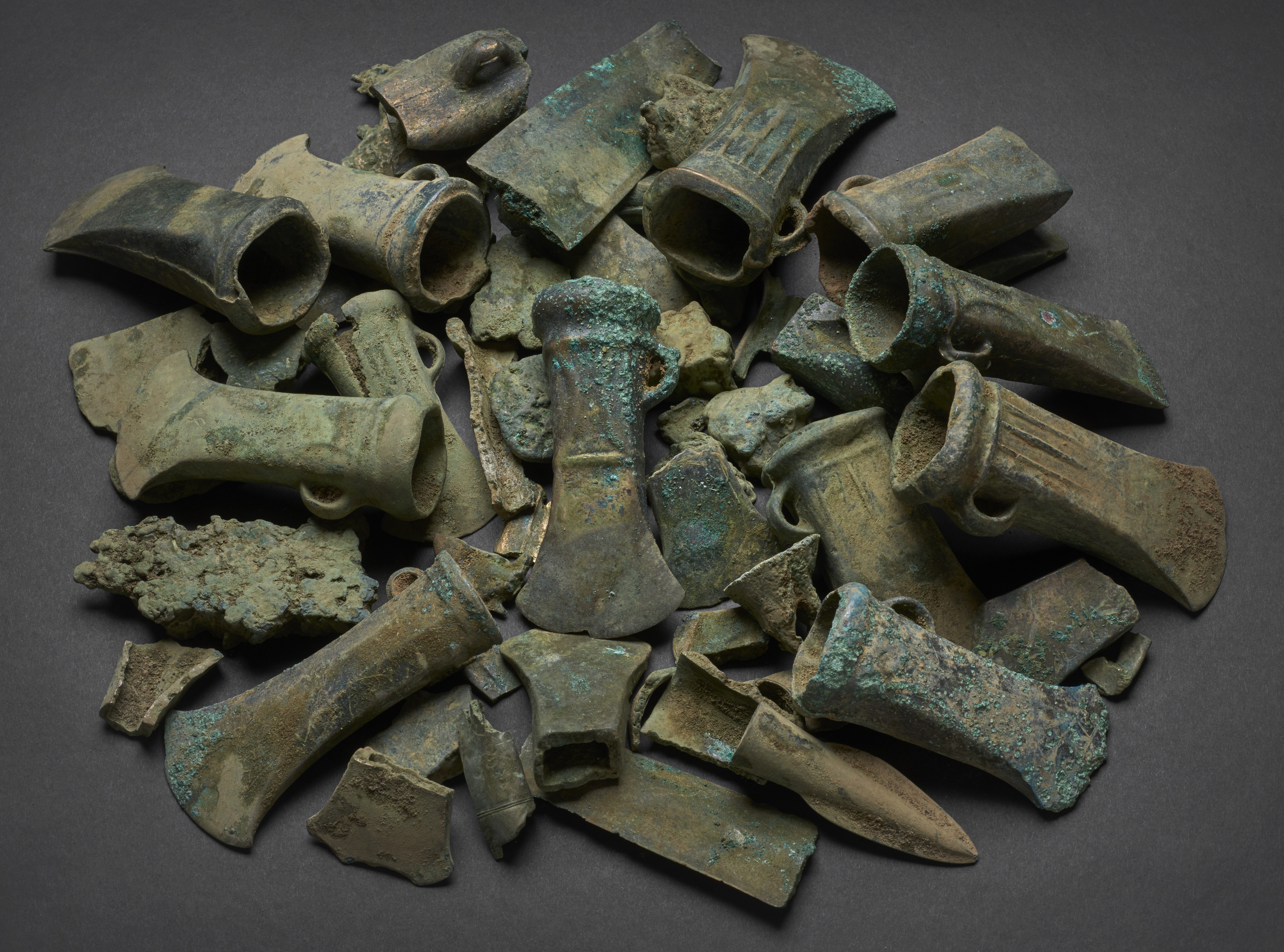
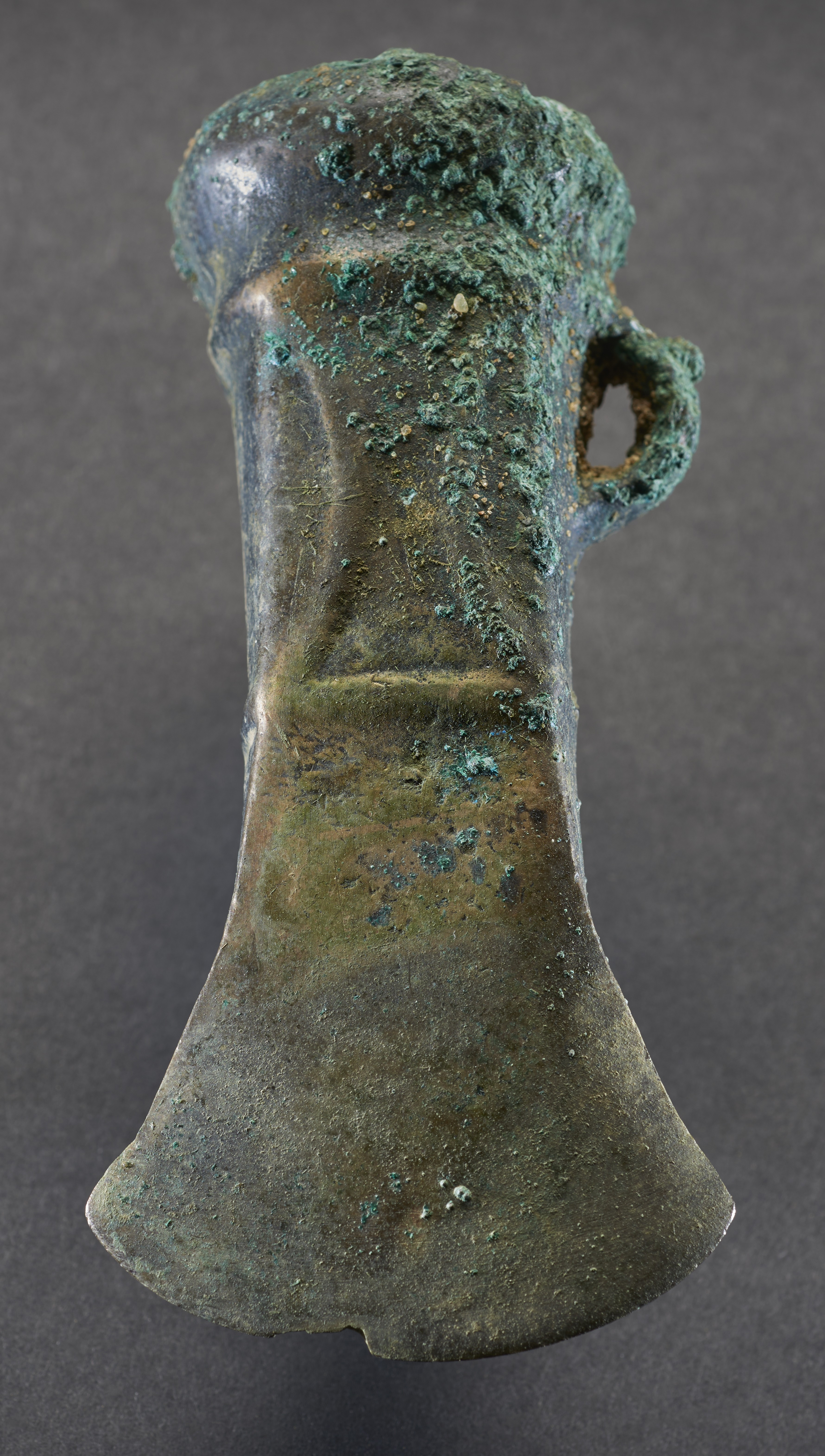
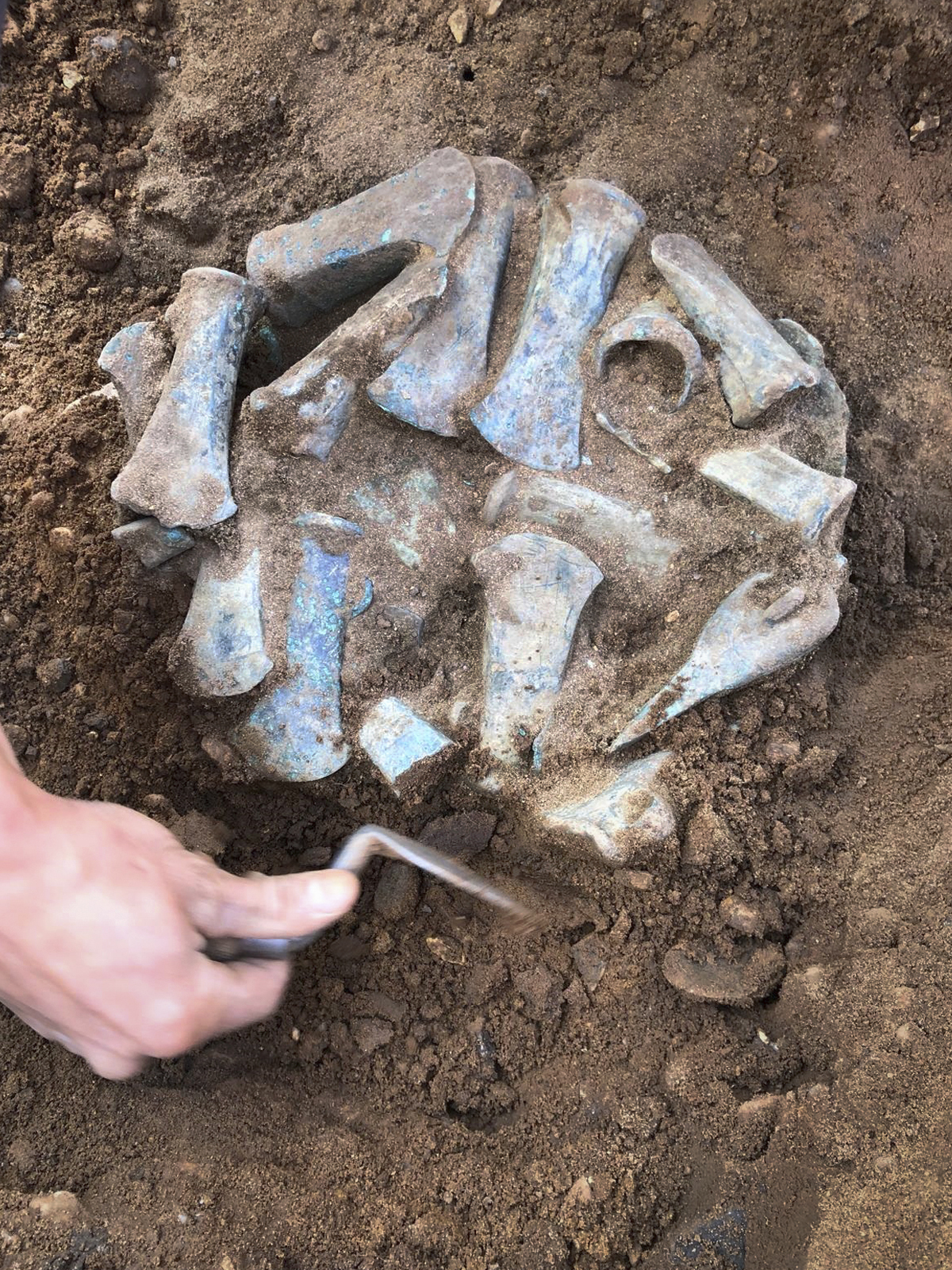
Weapons including axe heads, spearheads, fragments of swords, daggers and knives, alongside some other unusual objects rarely found in the UK, make up a total of 453 bronze objects that were probably deposited sometime between 900-800BC and remained undiscovered until 2018.
49 BC ~ Boudicca
Boudicca led her troops to London following the Great East road, almost certainly ravaging the tiny settlement of Durolitum (near Romford) on the way.
946 ~ Pyrgo Palace
Pyrgo Palace (originally Portegore) was probably built as a hunting lodge. Over the following 800 years or so it became the home of a great number of dowager queens and other royal persons. Pyrgo's history is tangled with that of the Royal Palace.
969 ~ Wennington first mentioned
First recorded in 969AD as Winintuna, there is a suggestion that Wennington was named for the Saxon chief, Wynna. It is a small, ancient marshland village bounded on the west and north by Rainham, and east by the village of Aveley, and south by the Thames. Its boundary with Aveley was being disputed in the 19th century but ultimately settled in 1842.
1060 ~ The Royal Palace of Havering
The Royal Palace of Havering originated as a hunting lodge in 1060 for Edward the Confessor.
1086 ~ The Domesday Book
The Domesday Book shows the area had 14 manors, the largest being Havering (which
included Havering,
Hornchurch and the hamlets of Romford and Collier Row) with a population 0f 405 villagers, small
holders, slaves, freemen and their familes.
Rainham had 211;
Upminster had 157;
Cranham had
130;
North Ockendon
had 103;
Great Warley had 54 ;
Wennington had 13.
1159 ~ Suttons Manor
Suttons Manor was created by Henry II, who gave all the land between Abbs Cross Lane, Dover's Corner. the River Ingrebourne and Pelt Street (now High Street) to the Monastery of St. Nicolas and St. Bernard of Savoy in Switzerland in thanks for the hospitality given to a royal envoy in difficulties in the St. Bernard Pass between Switzerland and Italy. The name came from an early resident, but Suttons Lane was originally Lake Street, overlooking water now taken up by Hornchurch Railway Station. In 1392Richard II and the Pope agreed this land could be sold to William of Wykeham to endow New College, Oxford, thus creating an absentee landlord for a large part of Hornchurch. The largest residence on the estate was Hackton (not to be confused with Hacton in Upminster) that was roughly where Central Drive is now. Other large properties were Suttons Gate, Suttons Farm, Elm Farm and Sockets (now Albyns Farm, the only one still standing). Suttons Farm can be traced back to 1397, the last farmhouse being Victorian. It was used as an airfield in WW1, reverting to a farm after the war and then becoming RAF Hornchurch in 1928. Suttons Gate stood where Ravenscourt Grove is today and was named after a gate on the north side of the house to stop people having access to Suttons Farm. The gate was removed 1840 and the Georgian property was overtaken by residential development in 1936. A small part of the estate in now the Hornchurch Country Park.
1159 ~ Hornchurch Priory
Founded in 1159, as the hospice of St. Nicholas and St. Bernard, Montjoux (Valais, Switzerland). Hornchurch Priory, which closed in 1391, stood where the (now closed) White Hart was, at the bottom of Hornchurch Hill.
1170 ~ St. Helen and St. Giles
St. Helen and St. Giles is a complete, late Norman church built by Richard de Lucy, justiciar, who married the daughter of Henry II. The dedication of the church to these two saints is unique in England. It is a Grade 1 listed building.
1199 ~ Rainham Ferry
The ferry from Rainham Essex to the Lesnes Abbey, Erith in Kent was the lowest crossing on the Thames until the Gravesend- Tilbury ferry was established in 1268. It probably existed before 1199 but this is the first recorded date for it. The ferry was governed by the tide for operation, downstream on the ebb tide and upstream on the incoming tide for the return journey, it was only steered by a rudder and relied on the tide for power.
1200 ~ Mawneys House
King John granted 'the wood at Romford' to Roger Bigod, the Earl of Norrfolk, at a rent of 5 shillings a year. It stood 150 yards north of Romford High Street on the site now occuppied by the United Services Club. Walter de Mauny held the estate in the 14th centuary when the estate covered 140 acres. It was rebuilt in the 17th century, sold for housing development in 1883 and finally demolished in 1935.
1222 ~ Hornchurch first mentioned
Monasterium Cornutum, which roughly translates as 'church with horn like gables'. Although Roman remains, sufficient to prove a settlement, have been found at Mardyke farm in South Hornchurch, the origins of the main village are obscure. It probably dates from Saxon times, and a church, described in charters and legal documents as the 'Ecclesisa de Havering' once occupied the site of the present Church of St Andrew, which dates from the 13th century. This prominent medieval church was once the principal church in Havering.
1223 ~ St. Laurence Church
St. Laurence Church has a 13th Century tower, rubble-walled, four square and sturdy buttresses only at the foot. It was much rebuilt by W G Bartlett in 1862-63 but retains the 14th century north arcade with short quatrefoil piers, moulded capitals and double chamfered arches.
1247 ~ Romford Market Charter
Romford Market Charter was granted by Henry III. It was an obvious choice, being half-way between Hornchurch (industry) and Colliers Row (manufacturing charcoal). Under the Charter, no other market could be held within 6 and two-third miles (the distance a flock of sheep could be driven in a day).
1262 ~ Mitchell or Howard's Mill, Hornchurch
The mill was 300 yards from the rear of St. Andrew's Church in the Dell, Hornchurch. A number of mills stood on this site, the last was post mill which closed down in 1912 an was destroyed by fire in 1921
1320 ~ Henry de Yevele
Henry de Yevele, master mason and architect, directed the King's works at Westminster, the Tower of London and Havering Royal Palace.
1323 ~ Romford Old Chapel
was a wooden chapel of ease by the River Rom for the residents of an expanding Romford. It was built after residents had petitioned monks of St. Bernard at St. Andrew's Hornchurch for a place of worship. It survived for 83 years until overcome by rot.
1334 ~ Stubbers first documented
Stubbers has a documented history dating back to 1334, although only the garden wall remains from the original mansion. The estate was named after William Stubbers, a yeoman farmer who had formed it between 1438 and 1463. Humphrey Repton, the great late Georgian landscape designer provided designs for Stubbers in 1796, detailing them in one of the trademark Red Books (so named for their red morocco binding) which he presented to his clients. The Red Book for Stubbers still exists, and is held by the Essex Record Office. William Coys the famous botanist, lived at Stubbers, North Ockendon, until his death in 1627. He cultivated many unusual species in his walled gardens, and established one of the earliest plant collections recorded in England. A hundred years later many of the plants from Stubbers were used to establish Kew Gardens.
1374 ~ Royal Palace Main chapel
Main chapel at the Royal Palace rebuilt.
1400 ~ Alice Perrers
lived at Gaynes Manor, Upminster. She died there in 1400 after a life of great notoriety. She was married to Sir William of Windsor, Viceroy of Ireland, but was also the notorious mistress of Edward III. Her influence over the king led to accusations of witchcraft in 1376.
1403 ~ Isabella of Valois
Isabella of Valois was only 7 years old when she married Richard II in 1396, but she was widowed three years later when her husband was dethroned and murdered. She was held at Havering Palace until she was repatriated to France in 1403.
1406 ~ St Edward the Confessor Chapel
Henry VI gives permission for the building of St Edward the Confessor Chapel in Romford, on the site of the present church.
1410 ~ Sir Thomas Cooke
Sir Thomas Cooke began building the first recorded Giddy Hall in 1467. He was Lord Mayor of London in 1462.
1420 ~ Sir Thomas Urswick of Marks and Gobions
Sir Thomas Urswick of Marks and Gobions (known as Up-Havering) was elected to the common Council of the City of London and was elevated to Recorder of London in 1454. Using his position he obtained Havering Liberty its first charter. He was knighted on the field at the Battle of Barnet, 5th May 1471 and the next year he was created Chief Baron of the Exchequer.
1437 ~ Joanna of Navarre
Joanna of Navarre was the second wife of Henry IV (reigned 1399-1413), she was accused of witchcraft but later pardoned. She died in some disgrace at Havering in 1437 and her ghost is said to haunt the site of the Palace.
1450 ~ Hall Barn
Incorrectly known as the "Upminster Tithe Barn", Hall or Home Barn is a timber framed, thatched and
weather boarded structure with a central cart opening.
The original weather boarding was of verticle boards, some of which remain. It has an aisled interior, the
aisles carried round the ends.
From 1976 it was an agricultral museum and is now currently known as the Museum of Nostalgia and due to
repopen in 2026 after significant programme of works have been undertaken on the Barn structure and roof.
1465 ~ The Liberty of Havering
The Liberty of Havering was formed by Royal Charter in 1465. Edward IV grants the Liberty of Havering,
removing
Romford, Hornchurch,
Havering-atte-Bower and Noak Hill from the Hundred system. It meant that the courts were overseen by
the
King's
steward or even occasionally by the King himself. It also meant that residents could carry a docket
from
the Court
or have the Royal Arms stamped on their carts, allowing toll-free passage throughout the kingdom. The
powers of
the Liberty
had been in gradual decline since around 1828 and in 1892 its Monasterium Cornutum, which roughly
translates as
'church with
horn like gables'. Although Roman remains, sufficient to prove a settlement, have been found at
Mardyke
farm in
South
Hornchurch, the origins of the main village are obscure. It probably dates from Saxon times,
and a church, described in charters and legal documents as the 'Ecclesisa de Havering' once
occupied the site of the present Church of St Andrew, which dates from the 13th century. This
prominent medieval church was once the principal church in Havering. The unusual Highland
bulls head on the eastern gable of the chancel was first mentioned in 1824, but 'points of lead
fashioned like horns', apparently in the same position, can be traced back to 1610, and could
have even earlier origins. By 1384 a bull's head and horns appeared on the seal of the Prior of
Hornchurch, and as well as suggesting that the church had horn-like gables, it could also
reflect the area's long association with the leather industry. The 'Hornchurch Hoard,'
consisting of 448 silver pennies from around 1223-60 was found by workmen in the Upminster
Road, an area within the bounds of the former Hornchurch Priory. They were mostly English
coins, struck in the reign of Henry III, with a few contemporary Scottish and Irish coins. At the
time of the Domesday survey in 1086, Hornchurch was part of the royal manor of Havering, but
from the 13th century onwards it became a flourishing community in its own right. There were
at least 10 manors, several farms, and a leather industry that lasted over six centuries. The
industry supplied work to a large number of people including fellmongers, tanners and
skinners, and the goods produced had an outlet at Romford Market. In 1789 the Old
Hornchurch Brewery was founded by John Woodfine, supplying the inns in the area. The
economy, involving agriculture and small trades and crafts, developed further in the 18th
century when the Wedlake Brothers, Thomas and Robert, opened an innovative iron foundry in
Billet Lane. They specialised in agricultural implements, further serving the economy of the
area. Thomas lived opposite the foundry at Fairkytes, and like several other gentlefolk who
chose to live locally, built or improved houses in the area.
Courts of Quarter Sessions and Petty Sessions were transferred to Essex County Council.
1482 ~ The Lion Inn, North Street, Romford
The Lion Inn opens in 1482. At various times known as the Golden Lion and the Red Lion Inn. Looks like two conjoined buildings, but actually it was built on three timber sections.
1483 ~ Liberty of Havering Courthouse
The Liberty of Havering Courthouse was at the west end of Romford Market, together with a prison cage. It was rebuilt 1737/40, but by 1790 the cells were not being used. Rebuilding took place in 1826 to include two shops on the South Street side. It lost its legal powers in 1892 and was used by the Romford Local Board as council offices until 1931. It was demolished in 1933.
1483 ~ Roger Reede Almshouses
The Roger Reede Almshouses were established by the will of Roger Reede, who possibly set up the endowment to make up for the misdeeds of his earlier days.
1504 ~ Sir Anthony Cooke
Sir Anthony Cooke was a scholar and close associate of Henry VIII. He was a tutor to the young Prince Edward, Cooke was knighted in 1547.
1586 ~ Appleton's Almshouses
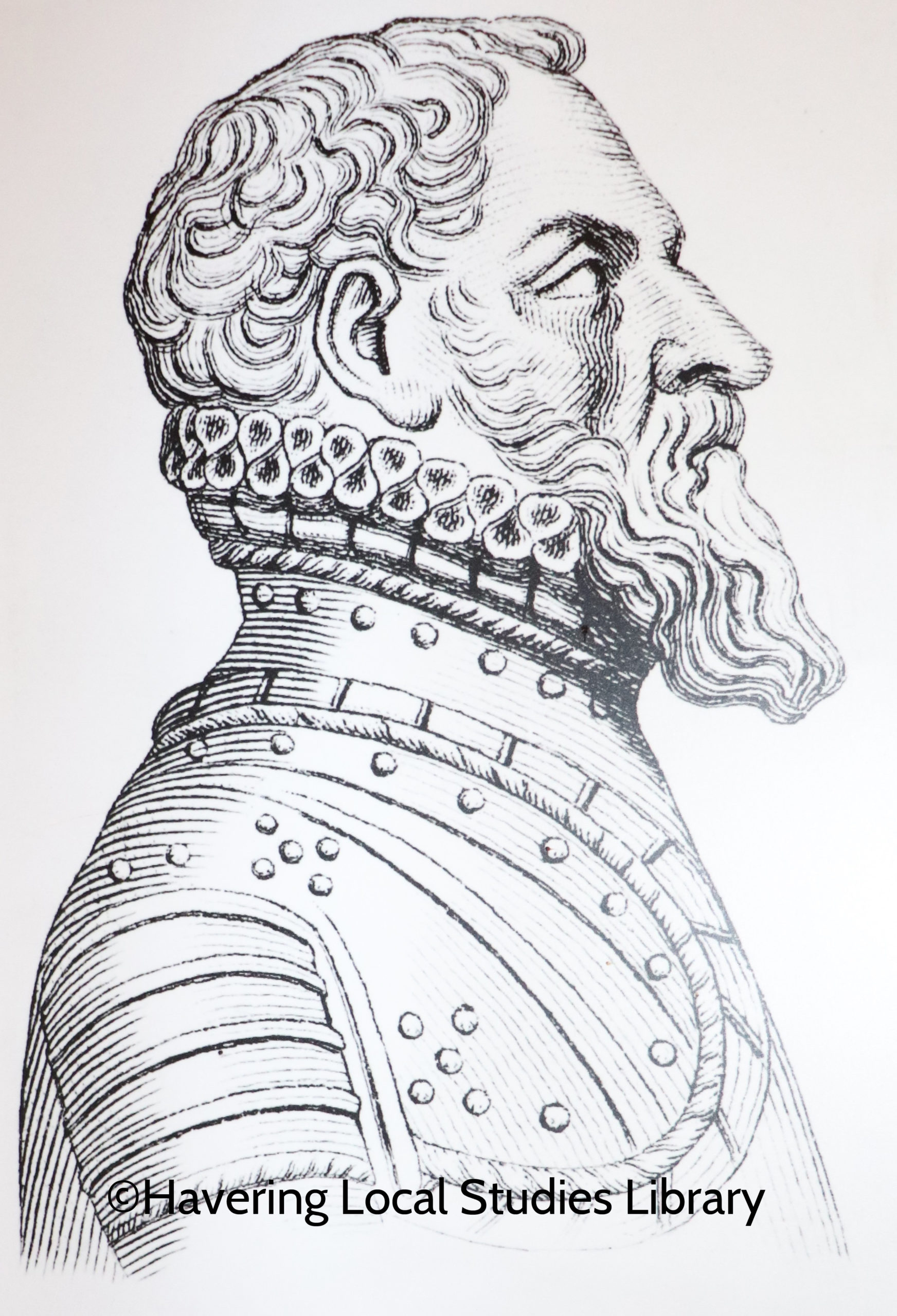
In 1586 Jane Ayloffe, a widow, bought a house on the south side of High Street for conversion into 3 alms-houses. The alms-houses were given in trust for the aged poor who had lived in Hornchurch for at least 7 years. Appleton's Almshouses were three cottages and gardens in Hornchurch High Street that were let to poor people at 10 shillings 2 pence per annum. They were demolished in 1967.
1588 ~ Queen Elizabeth
Queen Elizabeth who was brought up largely in Havering, is reputed to have stayed at the Royal Palace the night before delivering her famous "I have but the body of a weak and feeble woman..." speech at Tilbury. The Royal Palace was prepared as a command post in case the Spanish Armada had landed on the Thames Estuary.
1592 ~ Francis Quarles
Francis Quarles, born at Stewards, Romford, became a Royalist poet. His most famous work was Emblems (1635), together with Feast of Wormes (1620) and Argalus and Parthenia (1629). Latterly he wrote tracts in defence of Charles I, consequently a great deal of his output was destroyed by Parliamentarians during the Civil Wars. In 1618 he married Ursula Woodgate, they had 18 children. The Quarles family of Romford, divided by the Civil War: Francis Quarles (1592–1644) of Stewards Manor in Romford was poet and Protestant patriot. The Puritans loved his poetry and the Royalists his political pamphlets. His son, Lieutenant Colonel James Quarles, was the most senior officer in Denzil Holles' Parliamentarian regiment at the Battle of Brentford, where he was killed in 1642. Another son, John Quarles (1625–1665), was studying in Oxford when the town became the King's headquarters. He is believed to have served in one of the Royalist companies there in 1642.
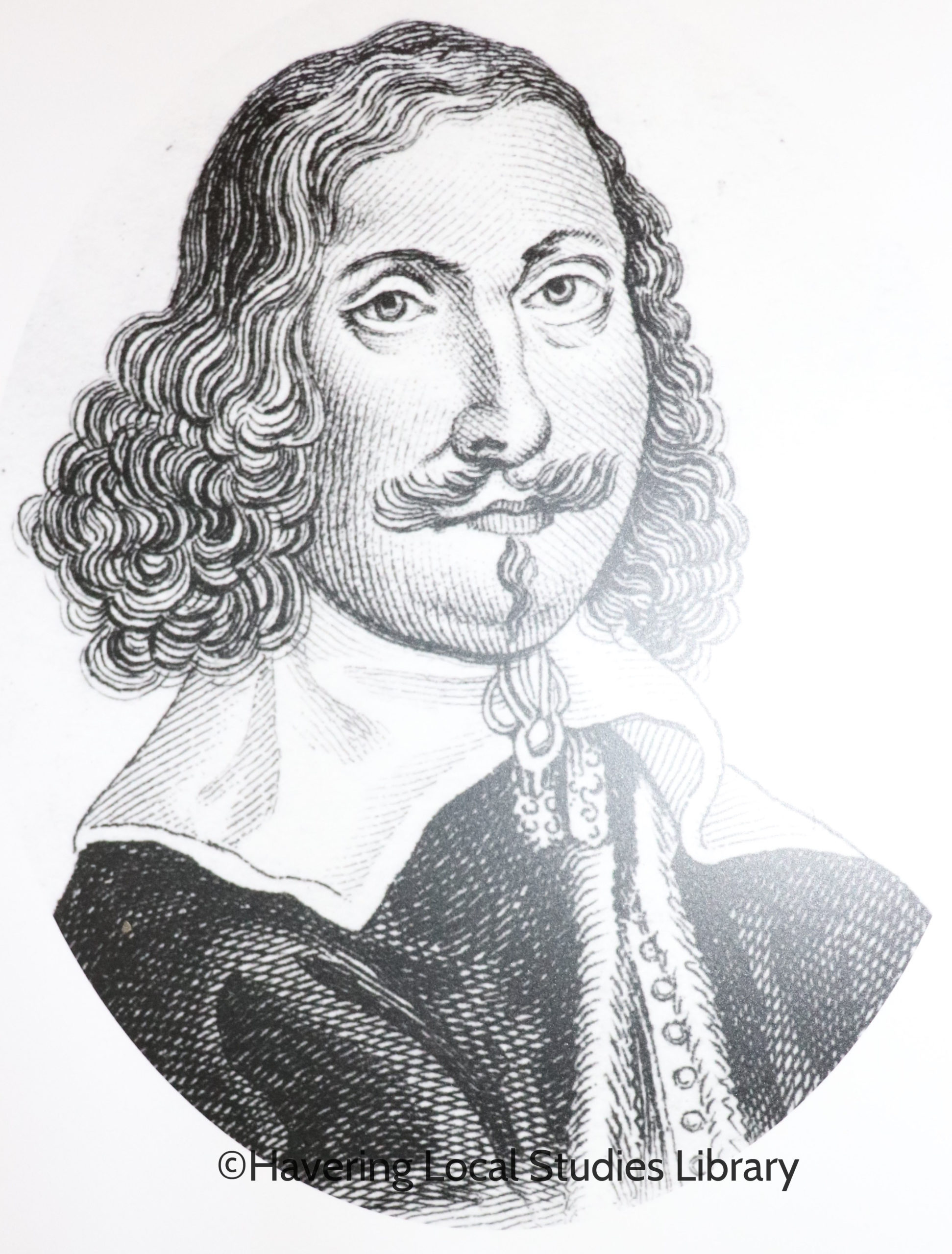
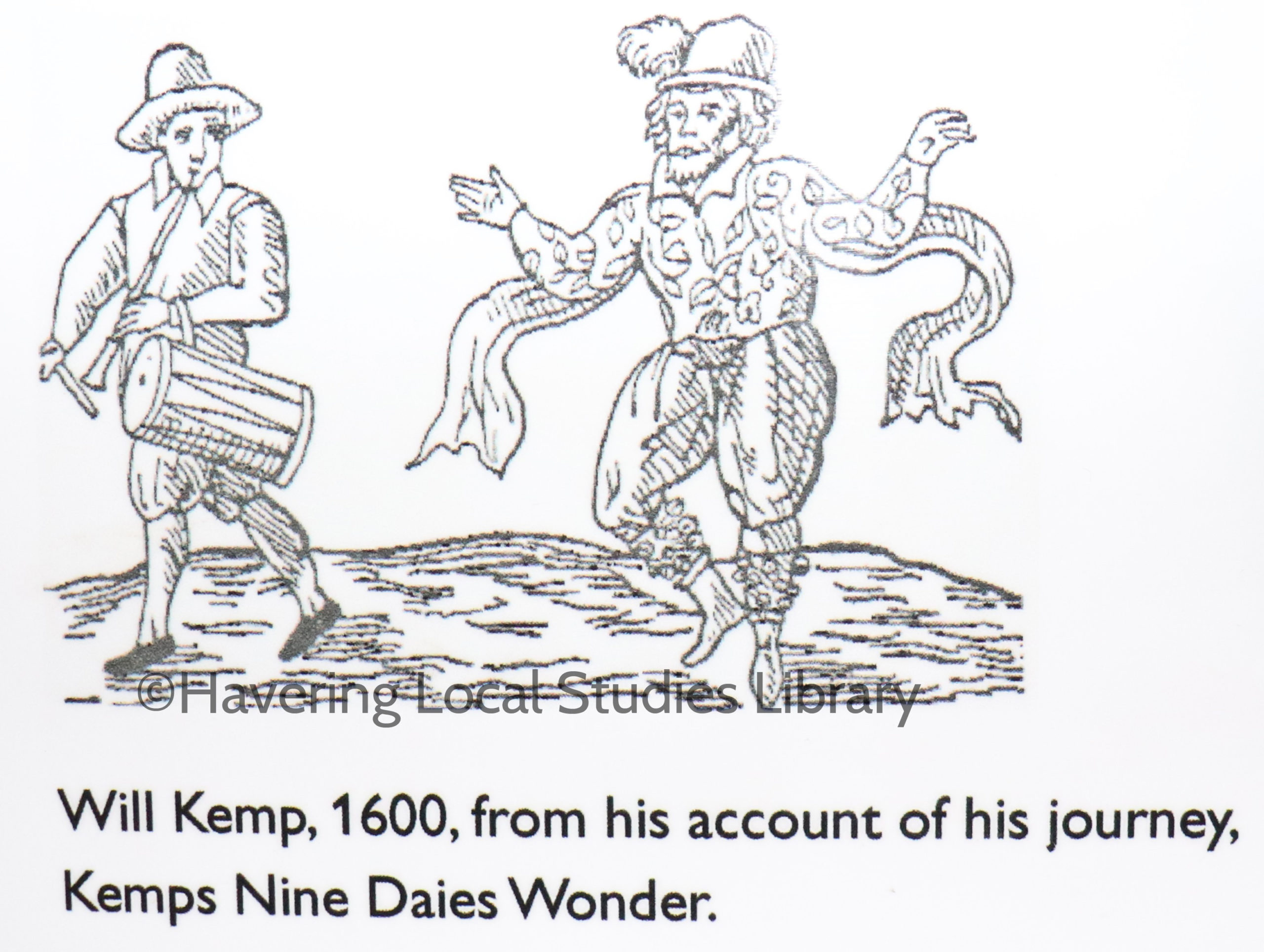
1600 ~ Will Kemp
Will Kemp, a clown and actor, danced from London to Norwich, attracting huge crowds. After a slight injury in Chadwell Heath, he was brought to Romford, stayed overnight, and then went back to the point where he stopped dancing before beginning again.
1601 ~ Sir Francis Bacon
Sir Francis Bacon the Elizabethan statesman, philosopher, essayist and author, became landlord of the Golden Lion pub when he inherited it from his father in 1601.
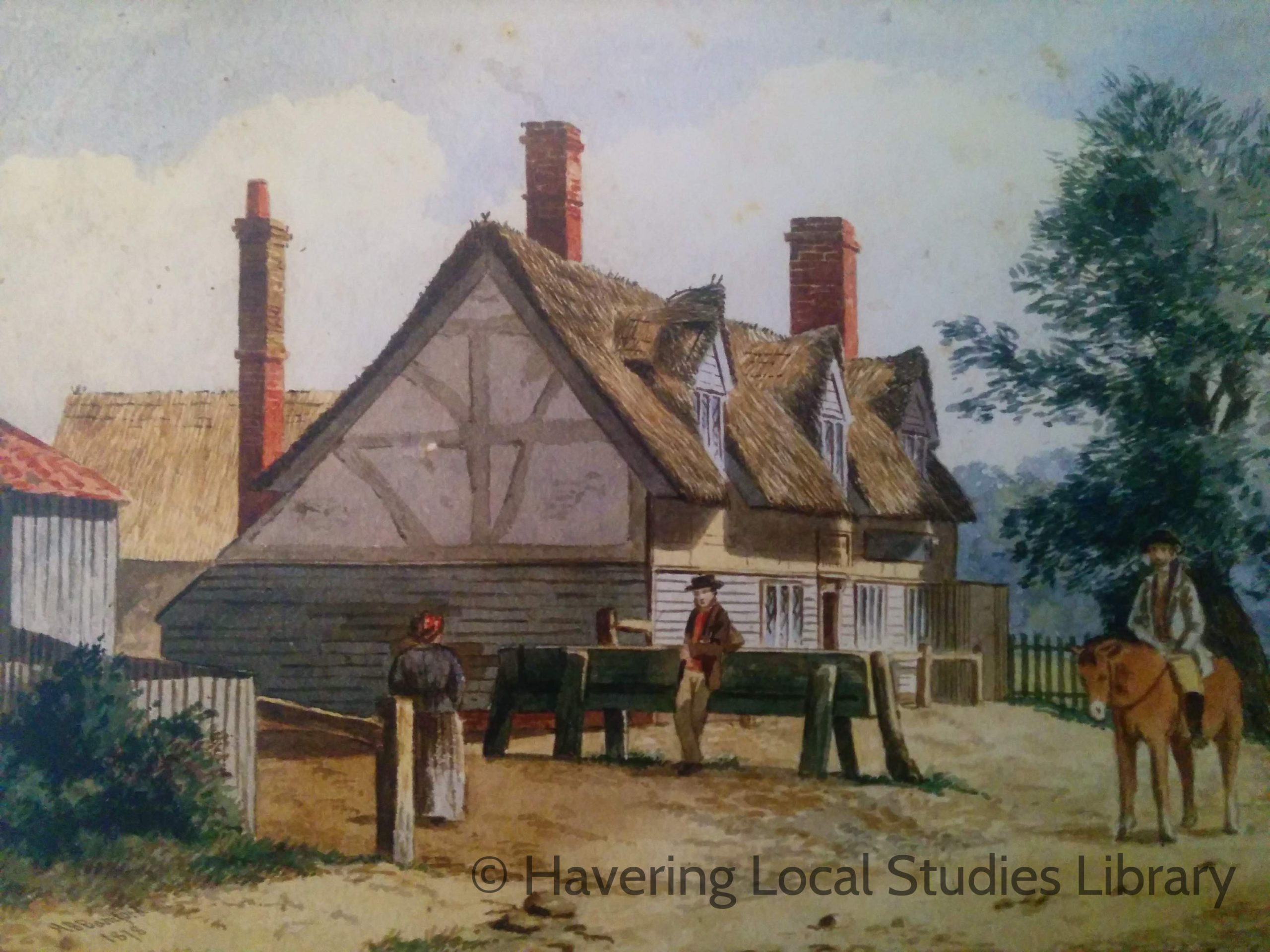
1618 ~ Rising Sun Mill
Rising Sun Mill opens on Victoria Road in Romford. It was forced to close in 1840 when the new railway embankment cut off its wind supply. The mill closed in 1876.
1632 ~ Sun Inn
Sun Inn, London Road, Romford built by William Grafton. Until rebuilt in the 1930s, it was probably the oldest inn in the district.
1638 ~ Charles I at Royal Palace
Charles I was the last monarch to stay at the Royal Palace. He was traveling with his mother, Maria de Medici, the Queen Mother of France. She saw the crumbling palace and refused to stay there, instead staying in Gidea Hall.
1657 ~ William Derham FRS
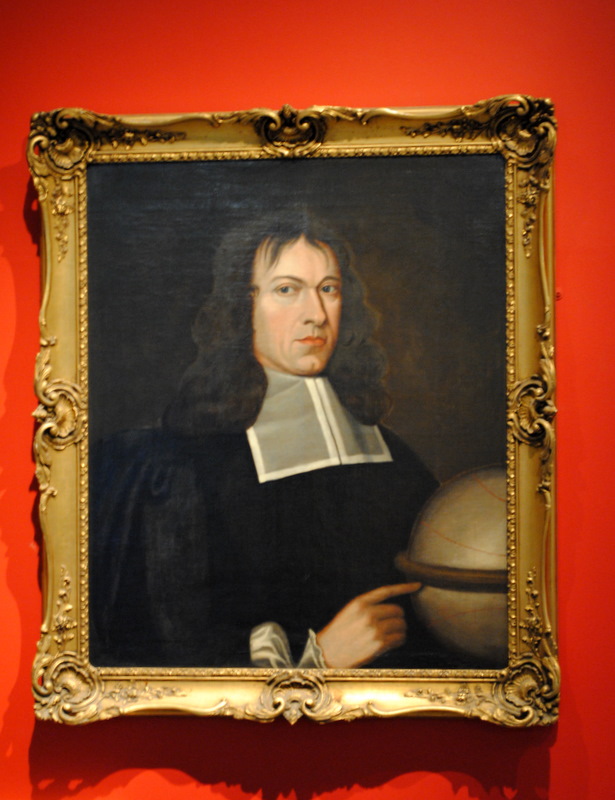
Worcestershire-born William Derham was appointed Rector of St. Laurence's Church, Upminster in 1689. He lived in the village until 1716, when he was made a Canon of Windsor, although he remained Rector until his death. In addition to his ministerial, Derham served as the local physician and took a keen interest in science and nature. Derham made daily records of Upminster's weather in 1697-99 and 1704-05, researched bird migration, and created a large museum of insects and birds at his rectory. Most famously, he accuratley estimated the speed of sound by having friends fire shotguns at a distance and observing the interval between the the flash and the arrival of the sound. He is buried in the chancel of St. Laurence (although another source says Upminster churchyard), however, by his own request, no memorial was ever erected to him.
1665 ~ Upminster Common Mill
Upminster Common Mill off Ivy Lodge Lane was a post mill that ceased trading circa 1880.
1665 ~ Samuel Pepys
Samuel Pepys was among those who moved to the area to escape the plague. Ninety people lost their lives in the Romford area, and a Pest House was built in Collier Row.
1679 ~ Ann Tipping
Ann Tipping (née Cheke) was an educationalist who founded the school in Havering village in 1724 that bears her name. She is buried at St. John the Evangelist Church, Havering-atte-Bower.
1680 ~ King's Head, Hornchurch
The King's Head Inn at Hornchurch is built. Not the oldest pub in the area, but the oldest still in its original building. In 2007 it turned into a restaurant.
1696 ~ General James Oglethorpe (1696-1785)
Founder of the American state of Georgia in 1731. Retired to Cranham Hall. Oglethorpe gained his early experience as a soldier through a commission abroad. He then proved to be a shrewd campaigner on behalf of imprisoned debtors and in 1732 crossed the Atlantic to found the new colony of Georgia. A home for worthy but poor settlers, this would also provide a buffer for South Carolina against Florida, then held by the Spanish. He rejected slavery in his new colony and even brought a group of Cherokee to meet George II in 1735. Back in England again in 1743, he rose through the ranks, fighting against the Jacobites in the rebellion of 1745. He married the heiress of Cranham Hall in 1743 and spent his long retirement there, during which time he became a celebrity in London society
1707 ~ Dagenham Breach
Although there had been flooding from the Thames on to the flood plains of South Hornchurch and Rainham, notably in 1376, 1594 and 1621, the inundation on 29th October created a lasting breach covering 1000 acres. This was partially down to the breaking of a sluice controlled by the marsh-bailiff, Edward Osborne. The Commissioners of the Levels attempted to close it, but all efforts were in vain until (coincidentally) 29th October, 1713. However, on 15th February, 1714 another storm broke through. The Breach was now about 25 feet deep at Low Water Mark and 250 feet wide, so an Act of Parliament was passed on 14th July 1714, charging tolls on all passing vessels to help defray costs. Captain John Perry began work in 1716 and on 4th September 1717 had stopped the Breach, only to have it washed away on 10th the work was finally completed in June 1720, having cost £40,000, but a stretch of water covering 40 acres remained until 1887 when Samuel Williams began to develop the site for Dagenham Dock.
1724 ~ Dame Tipping School
Dame Tipping School founded by Anne Tipping in 1724. It was rebuilt in 1837 and again in 1891.
1729 ~ Bower House
Originally named Monthavering it was designed by Henry Flitcroft. Bower House, Orange Tree Hill, is a mansion built in 1729 for John Baynes, Serjeant-at-Law, (a high ranking barrister), using stone quarried from the ruins of Havering Palace, including an angel bust corbel stone bearing the arms of Edward III. It is now a Christian training centre.
1729 ~ Rainham Hall
was built in 1729 for Captain John Harle. A National Trust property since 1949 but only opened to the public in 2015.
1760 ~ Elizabeth Balls - Goat Woman of Havering
Elizabeth lived in Ivy Holt Cottages sometimes there were upwards of 50 goats living with her. Her 'family' in 1815 consisted of 14 goats, 2 sheep, 17 fowls and a French dog.
1784 ~ Wedlake's (Iron) Foundry
Wedlake's (Iron) Foundry was founded by Thomas Wedlake
1789 ~ Hornchurch Brewery
Hornchurch Brewery, Church Hill, was founded by John Woodfine on the site of 16th century Hornchurch Lodge. It owned 36 local pubs including the King's Head and Bridge House. In 1874 it was brought by Henry and Benjamin Holmes, they sold it in 1889 to Charles Dagnall who turned it into a limited company named Old Hornchurch Brewery Company, but this went into liquidation. In 1892 Philip Conron bought it from the Official Receiver and after his death it was run by Stanislaus Conron until 1925 when it was purchased by Mann Crossman for the licensed
1792 ~ Round House
Built in Broxhill Road, it was designed as a massive tea caddy for William Sheldon by John Plaw.
1795 ~ Mendoza v Jackson bare knuckle-fight
A prize fight worth 400 guineas took place in Millfield, Hornchurch between Daniel Mendoza (aka Mendoza the Jew / Star of Israel) and "Gentleman" John Jackson. The contest was won by Jackson after 9 rounds.
1795 ~ Romford Barracks
Romford Barracks were established for six troops of horses in London Road, extending south (later Waterloo Road), during the war with France. They were demolished in 1825
1799 ~ Edward Ind takes over Star Inn
Edward Ind takes over the Star Inn in Romford.
1800 ~ The Old Chapel, Upminster
is a Grade II listed building. Built by Samuel Hammond it was originally known as the "Christian Church of Protestant Dissenters"
1803 ~ Upminster windmill
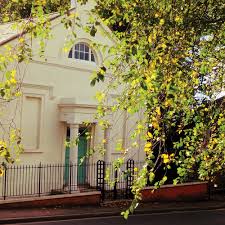
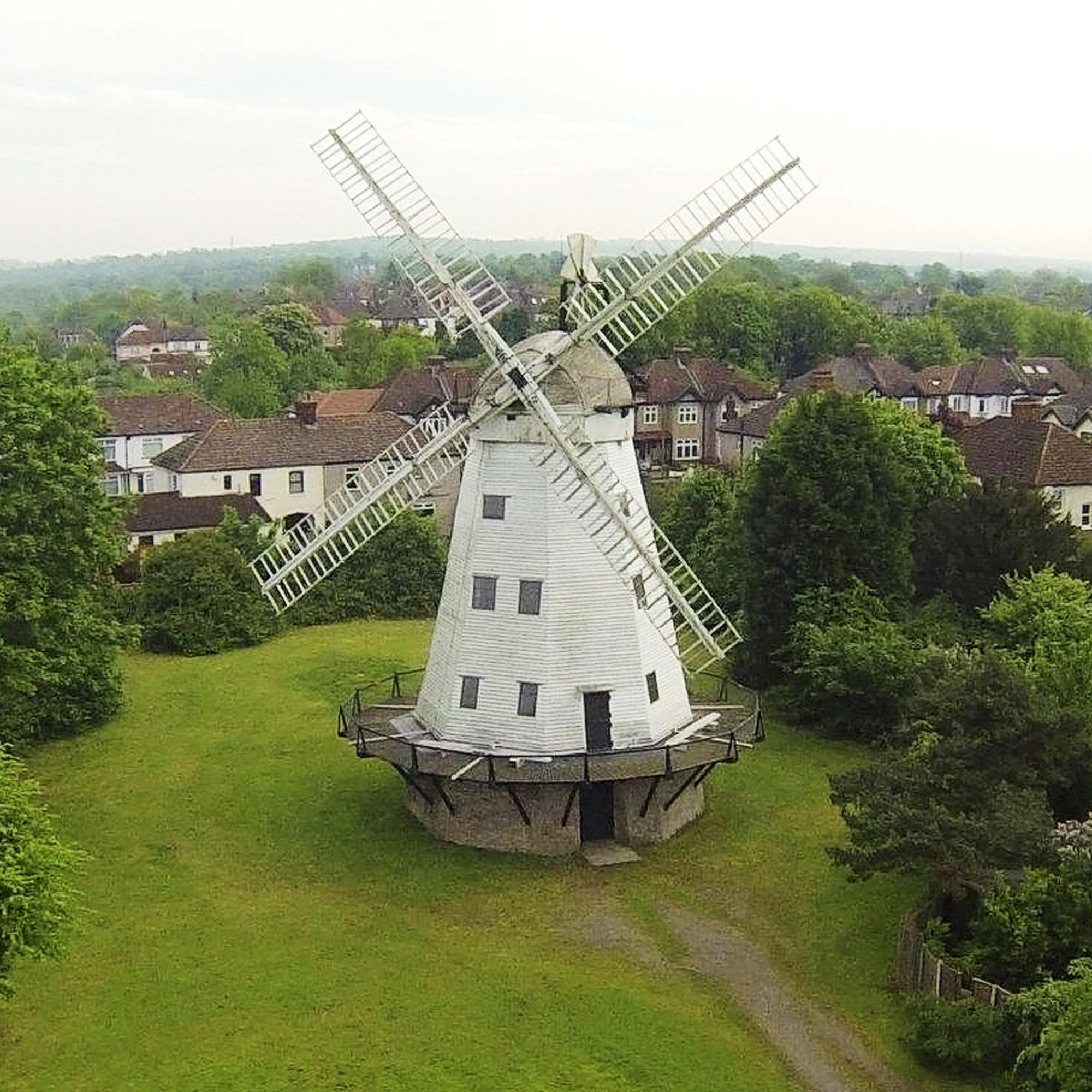
The Upminster Windmill building was started by farmer James Noakes in 1803, this English smock mill is a Grade II* listed building.
1810 ~ Fairkytes ironworks foundry
Fairkytes ironworks foundry was opened by brothers Thomas & Robert Wedlake. The foundry was situated in Billet Lane on what is now the green alongside the Queen's Theatre.
1810 ~ Collier Row Mill
Collier Row Mill was west of Lawns Way, off Chase Cross Road. It was a post mill that ceased trading around 1860.
1818 ~ Dagenham to Collier Row canal
The first of a series of proposals for a canal following the Thames via Dagenham Dock by the River Beam and across to Collier Row. Further proposals were made in 1820, 1824 and 1875. All sought to bring coal and manure to the area and take back goods and beer.
1833 ~ Thomas Lewis Wilson
1833-1919
Thomas Lewis Wilson was the first published author of a book specifically about any of the towns and villages in Havering, with his Sketches of Upminster in 1856. He followed this in 1881 with the illustrated History and Topography of Upminster. His books and research papers have been a major resource and inspiration for local historians in the district ever since.
1835 ~ Dry goods measures
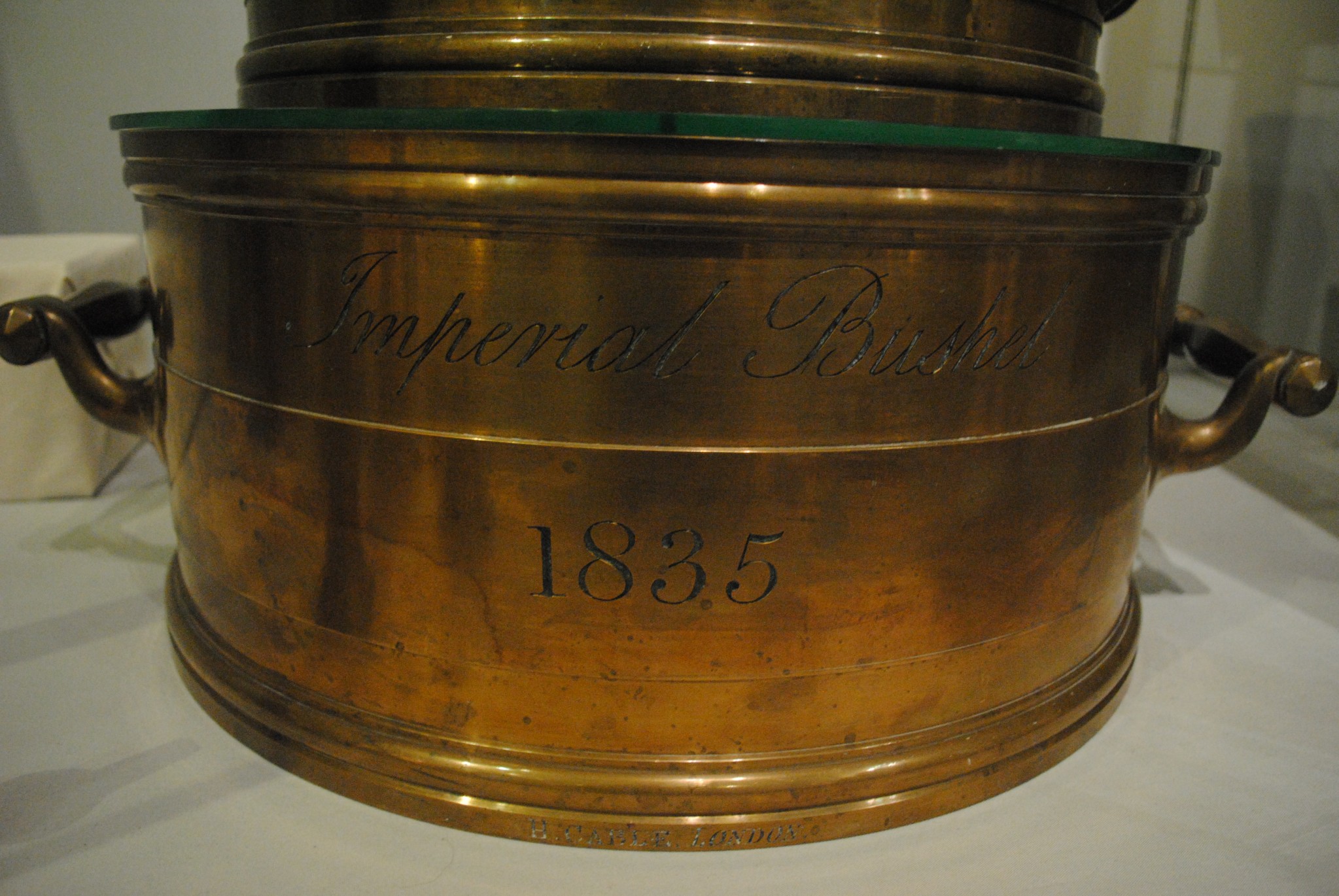
Dry goods measures for Liberty of Havering. Inscribed "Thomas Mashiter Esq. High Steward" .... Dated 1835
1838 ~ Romford Union Workhouse
Romford Union Workhouse, later Oldchurch Hospital, in Oldchurch Road, was built by Francis Edwards in a long facade of 25 bays with bowed centres. Smaller ranges of workshops behind originally contained the cruciform workhouse (demolished in 1993); a standard design of the period, which allowed the segregation of inmates and their observation from the Master's house in the centre. A separate gate lodge and two-storey block served the casual wards. The chapel built in 1839, was destroyed by fire 1975. The site was cleared in 2007 to make way for housing.
1839 ~ Romford Railway Station
Romford Railway Station is opened in 1839, the last section of a line from Norwich to Devonshire Street, near Bethnal Green in London. This train was intended to take over from the 40 licensed stagecoaches that were then running between London and Romford.
1841 ~ The Railway Factory
The Railway Factory on Elvet Road, Gidea Park, was an early and rare group of engineering works, built by John Braithwaite. it comprised of two large parallel brick ranges and a smaller power house with chimney. The North range, closest to the railway, has a two storey front block with central archway for engine to enter.
1845 ~ Corn Exchange
Built alongside the Golden Lion in Romford High Street by Harvey George it was later
reconstructed in 1861.
From the Havering Local Studies Library:
The Corn Exchange, High Street, Romford c. 1870
The Corn Exchange is prominent in this view of the High Street, Romford with the London and County
Bank
and the premises
of Griggs visible looking past the exchange building.
On February 10th 1845, George Harvey, a Romford auctioneer announced a prize for the best and next
best
designs and
plans for a new corn exchange in Romford Ten Guineas will be given for the most approved, and Five
Guineas
for the next
best designs and plans of a corn exchange to be built on the eligible site of the old Bank premises
in
the
centre of the
Corn Market at Romford, pointing out the best conversion and appropriation of the present range of
buildings, with the
view of combining Lecture and Reading rooms, and Public Discussion and Assembly Hall, worthy of the
largest and most
improving market town in England. The premises may be seen at any time by application for the key at
Mr.
Harvey George's
Office at Romford, where the Designs and Plans, with the owner's name, are to be delivered, sealed
and
directed, New
Corn Exchange, Romford, for the Committee, on or before the First day of March next.
The bank in question was that of Johnson, Johnson and Mann which was bankrupted after it failed in
June
1844- it had
taken over from another failed Romford bank, Joyner, Surridge and Joyner. The new Corn Exchange was
opened
for business
on Wednesday 5th November 1845.
The Essex Herald on 21st October 1845 reported on the new corn exchange and the opportunity to carry
out
market business
in a covered room instead of the open street, as it has hitherto been. It goes on to provide a
description, the new
building is about 60 ft. by 34 ft.: the side walls are 22 ft in height which gives the room a noble
appearance, and the
building affords ample light by the roof being nearly all covered in with glass. The stands are
arranged
on the best
principle we have seen; each desk is placed on a temporary platform, raised about 9 inches from the
floor
and is
enclosed (except in front) by a panelled partition, extending a few feet in front of the desk, so
that
each stand is
secluded from the observation of others. A subscription room and other apartments are attached to
the
exchange, the
floor of which being boarded, renders it suitable for every public appropriation. There will also be
showrooms opening
from the northern end of the exchange for the public exhibition of agricultural implements, and a
sale
repository for
the disposal of property generally.
Arthur Cornell described the Corn Exchange as the principal Hall in the town for concerts, public
meetings
etc . It
was used by St Edward's Church for services whilst the new church was built in 1851, the
Congregational
Chapel in 1883
after fire had damaged the church in South Street and in the First World War it was used by the YMCA
and
for public
meetings of the Romford and District Workers' Association, soon to become the Romford Labour Party,
and
for trade union
meetings.
Always in private hands, the Corn Exchange was enlarged in 1861. It was put up for sale in 1924 and
finally closed in
1931, though the building stood until partial demolition in 1968 to make way for the new Woolworth's
in
the High Street,
then in 1972, the final part of the building, with the Exchange lettering exposed above the Curtess
Shoe
Shop in its
final days.
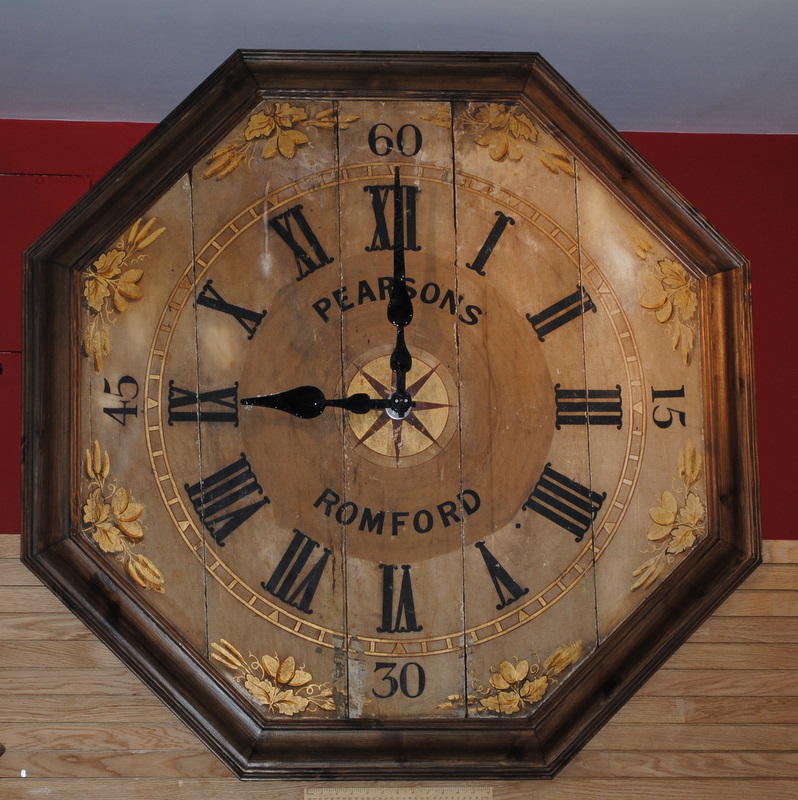
The Corn Exchange Clock was displayed in Pearson's Jewellers for many years and on the demolition of
their
premises, the
clock was stored in the Central Library in Romford until the Havering Museum was opened in 2010. It
was
refurbished for
the Havering Museum and is now on permanent display there.
Exchange Clock photographed in 2009 when it was stored in the Central Library in Romford. Pearson's
Jewellers had displayed the clock after the Corn Exchange closed and the Library stored it for
around
forty years in
anticipation of a museum opening in the town. It was restored and unveiled as one of the permanent
display items when the Havering Museum opened on May 26th 2010.
1848 ~ Captain Samuel Davis (1848-1926)
When the First World War broke out, Samuel Davis had already been captain of Romford's first official fire brigade for almost 25 years. He was co-founder, having gone into partnership with his fellow builder James Everett Dowsing in 1890, close to their premises in Mawney Road. Even though Romford was a large and growing town, the fire brigade numbered only 13 men, many of whom were initially recruited from Dowsing & Davis' firm. The operated a water tank with a hand pump, on a cart pulled by a pair of horses borrowed from the council dustmen. They had a machine called a quadricycle (essentially two tandem bikes), with the rest of their equipment stored in container between the gears. The brigade attended one particularly notable incident during the First World War. On 14th September 1916, there was a terrific explosion at the Rainham Chemical Works, formally the J.C. and J. Fields factory which manufactured T.N.T. The fire and subsequent explosion was caused by an employee smoking in the room used for drying nitrate soda. Seven people were killed but Davis and his team rescued 69 injured workers. The explosion all but destroyed the factory, blowing much of it into the Thames. For their bravery, each member of Romford Fire Brigade was awarded an O.B.E. on 5th July 1920. Davis' descendants still own his medal and many of them were inspired to follow his example and join the fire service.
1850 ~ Corn Exchange Clock
Currently on show in the Havering Museum's 'Made in Havering Gallery'. It has been renovated and converted to run on electricity with a radio link to keep it accurate. The clock has a wooden face, painted with corn and hops, and iron hands.
1850 ~ The Church of St. Edward the Confessor
The Church of St. Edward the Confessor was consecrated by the Bishop of Rochester on the 19th September 1850, to the Virgin Mary and St. Edward. The architect was John Johnson, the church replaced a chapel which dated from 1410.
1851 ~ Pyrgo House built
The architect Thomas Allason sent to Greece to study classical architecture for inspiration. It was demolished in 1940.
1851 ~ British School and National Schools
Hall Lane (now Station Road) Upminster open. From 1870 boys went to the National School on the east side of the road, girls to the National on the west side. Upminster Junior Mixed School was opened in 1928. The British School was pulled down in 1936, the National surviving until 1967.
1857 ~ Alfred Bennet Bamford
Born in Stanley Lodge, Eastern Road, Romford. Alfred Bennet Bamford was a water colour artist who specialised in paintings of the Essex Countryside. Died 21st October 1939
1858 ~ Victoria Flour Mill
The steam powered flour mill opened in 1858 on the corner of Victoria Road and South Street. The site is now occupied by shops in what is now called 'Old Mill Parade'
1864 ~ Charles Thomas Perfect
Wrote "Hornchurch During the Great war" and other local history books.
1867 ~ Sir Henry Pelly
Born in Upminster, Sir Henry Pelly came from a family of seafarers. In 1914 he was given command of the battle cruiser Tiger. However, he was dogged by problems, namely that the ship was unfinished and that the crew were inexperienced. This perhaps caused a blunder that almost lost the British the battle of Dogger Bank. Acting on intelligence provided by a wireless inter caption, Pelly and his ship were deployed as part of a squadron that engaged a German raiding squadron in the English Channel. Rear Admiral Beatty, the British commander signalled "engage ship in the enemy's line" (ships fought each over in parallel rows). This was misinterpreted by Pelly, who was second in line after Beatty's ship. He helped attack the lead German ship instead, leaving the actual target, the Moltke, free to fire on Beatty, whose ship, The Lion, was badly damaged as a result. Pelly was not the only captain to misinterpret an order that day, but his failure to pursue the German ships when they fled made him a target of an inquiry. He was only saved by the intervention of the First Lord of the Admiralty, Winston Churchill, who did not want to tarnish a battle that had ended in a British victory in spite of key mistakes. Pelly spent the rest of the war in relative ignominy. He was removed from active service in 1916 and appointed commodore of the Royal Navy barracks in Portsmouth where he remained for the rest of the war.
1868 ~ Harold Wood Station and Goods Yard opens
The station remains open today but the goods yard closed on 4th October 1965. A line ran from the goods yard to a brickworks on the site of Bates industrial estate. the buildings on platform 1 (fast London line) date from the original station, the rest were rebuilt in the 1930s when it increased to four lines.
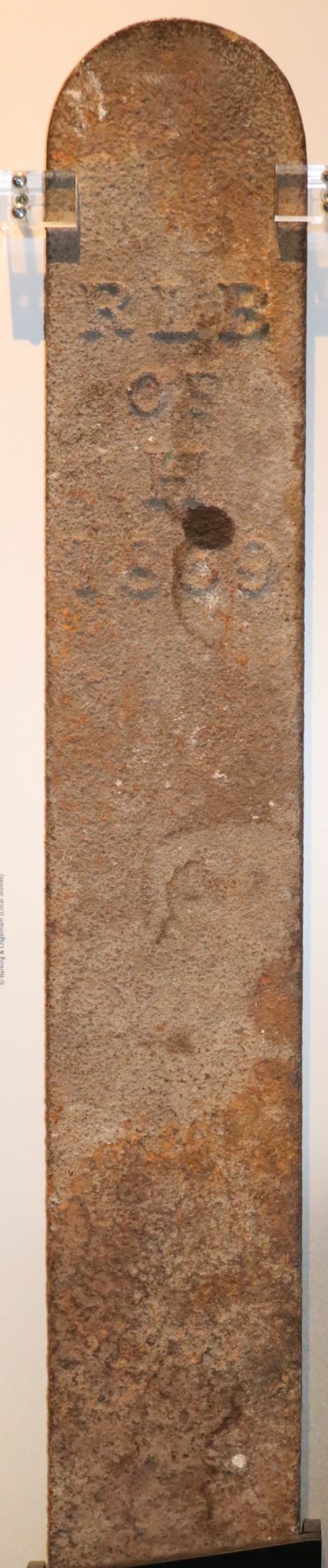
1869 ~ Cast Iron Boundary Marker
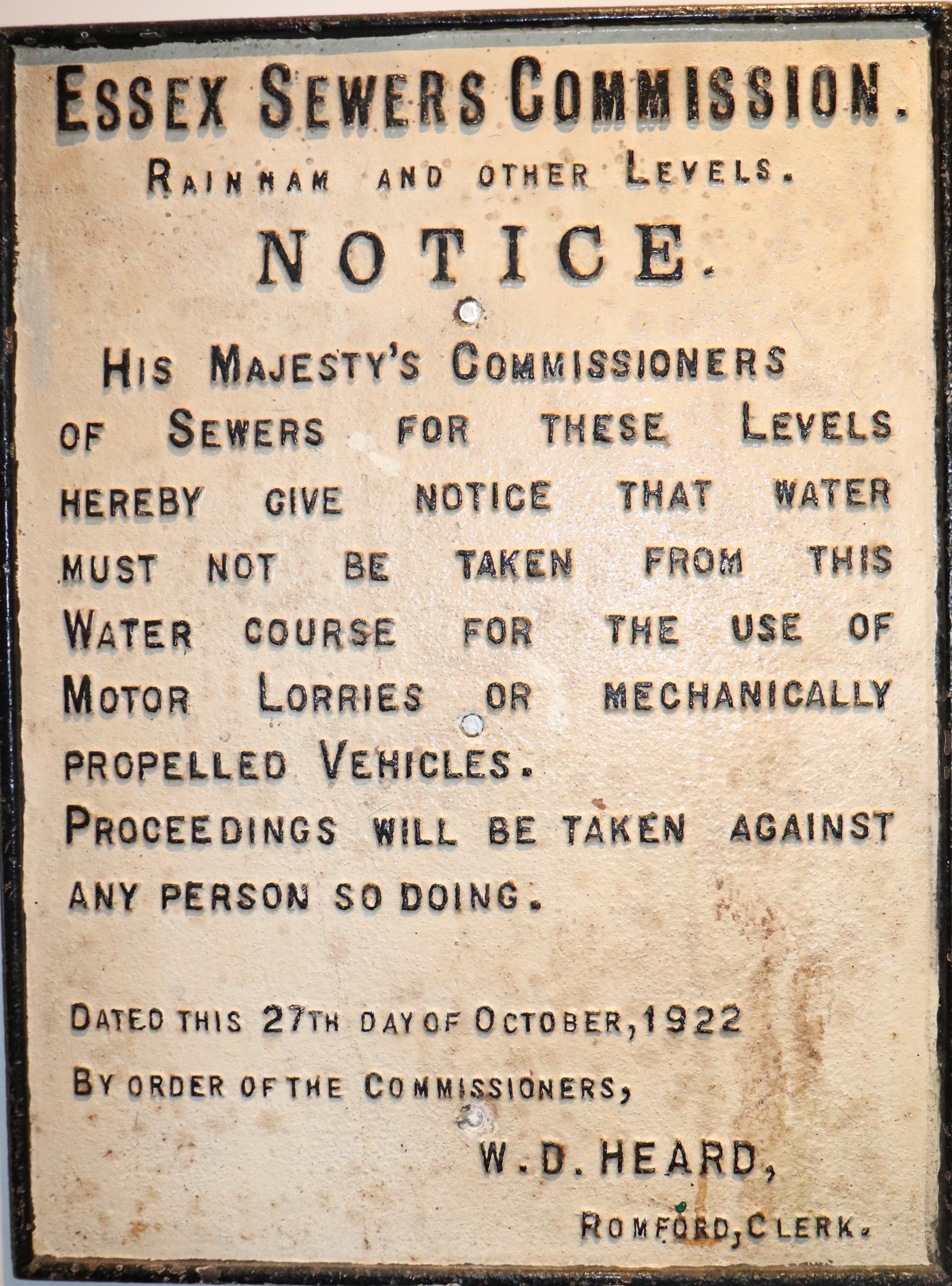
These boundary markers indicated the boundary of the marsh area overseen by the Commissioners of Sewers. The term "sewers" wa used in the past refer to an open drain or ditch.
1870 ~ Boyd School
Richard Benyon, owner of Cranham Hall, gave the site and paid part of the building costs for the school. It taught 115 pupils and had accommodation for Miss Boyd, the school mistress.
1870 ~ Elizabeth Fry
nee Gurney, the Quaker social reformer, was born and died in East Ham, but spent some of her married like at Fairkytes, Billet Lane, Hornchurch. Her son Joseph, his wife and their eleven children lived at Fairkytes from 1870 to 1896.
1871 ~ Frances Beatrice Bardsley
Born in Spitalfields, the daughter of the Rector. Became Headmistress of Romford County High in 1906 based in a house in Eastern Road, Romford. The school moved to new premises in Heath Park Road in 1910 and in 1935 they moved again to their present location in Brentwood Road.
1876 ~ Romford Football Club
The original Romford Football Club was established in 1876 and played in the old Southern League.
1876 ~ Grey Towers
Grey Towers was built for Henry Holmes, the Hornchurch brewer. In a 50 acre park, the castellated house was used as a barracks for the Sportsmen's Battalion Rifles from November 1914 until 26th June 1915; the 26th Middlesex Regiment (the Navvies Battalion or 3rd Public Works Pioneers' Battalion) was in occupation during November and December 1915; and it was used as a convalescent hospital for New Zealand forces for the rest of the war. Demolished in 1931, although its two gatehouses survived until the 1960s.
1877 ~ Wennington School
Wennington School was built in 1887 adjoining the church. Until then, children had been taught in private houses, and in a thatched cottage in Church Lane that had been owned by the churchwardens. The cottage has since been demolished, and the school was converted into three dwellings in 1966.
1878 ~ St. John the Evangelist
St. John the Evangelist was built close to the site of the chapel of Havering Palace. It was by Basil Champneys, an early example of the Arts and Crafts architecture of flint, with stone dressing.
1879 ~ Lady Edna Clarke Hall
Lady Edna Clarke Hall had been an outstanding pupil at the Slade school of Art. She and her barrister husband lived in the Great House, Hall Lane, Upminster from 1898: Sir William died in 1932. Her best known series of paintings were miscellaneous drawings mostly for Wuthering Heights in 1902, when she also painted Upminster Common. In 1971 there was a retrospective exhibition covering 50 years of her career. Her paintings hang in the Tate Gallery, Victoria & Albert Museum and British Museum.
1884 ~ Albert Road School
The school opened in 1884 catering for 354 pupils. From 1956 it was known as Manor School until it closed on 31st August 2009.
1886 ~ St. Leonard's Homes
St. Leonard's Homes were built on 86 acres of the Harrow Lodge estate by F J Smith for the Board of Guardians of St. Leonards, Shoreditch for £6,300. A self contained village was built and opened in 1889 to contain, in addition to the eleven cottages (eachhousing 30 children) and a school, an infirmary, swimming bath, bakery and workshops. The Children's Home was taken over by the London County Council in 1930 and in 1965 by the London Borough of Tower Hamlets. It was sold for residential development in 1984.
1888 ~ The River Rom Flood
The River Rom became a huge conduit of water, trapping innumerable families in upstairs rooms. The Ind Coope Brewery was inundated and up to 30,000 empty casks were swept downstream; three or four hundred kilderkins (18 gallon casks) of unbunged ale were also lost. The High Street was under 8 feet of water. In Romford about one sixth of an average year's rain fell. There had been flooding in 1736 and 1841, but on a lesser scale.
1888 ~ Victoria Cottage Hospital, Romford
Built on land donated by William Mashiter (1812-1890) of Priests Farm at a cost pf £1000 in commemoration of Queen Victoria's jubilee
1889 ~ Edward Hillman
Edward Hillman introduced the first motor coach service to the area. There were scheduled stops in Romford and neighbouring towns.
1892 ~ Albert John Dyer
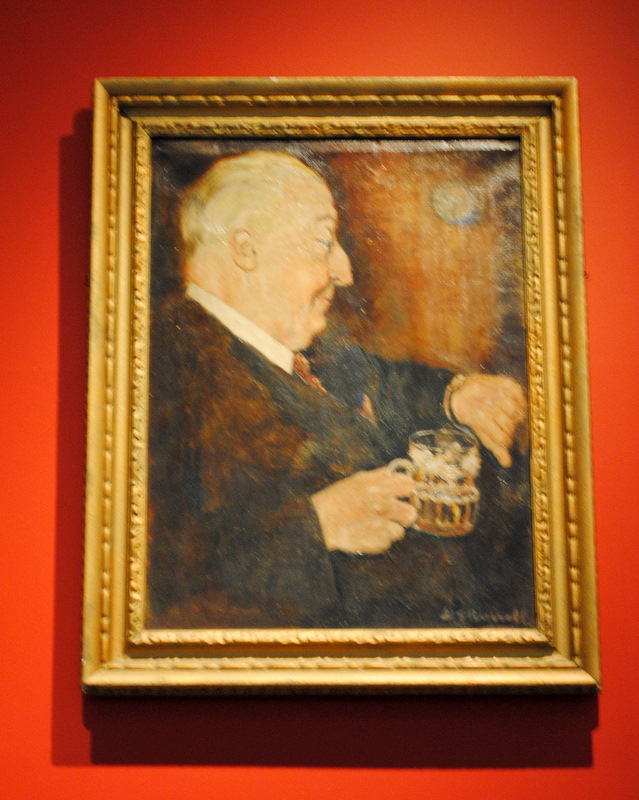
Albert John Dyer was the publican of the King's Head pub in Romford Market from at least 1922, and an Alderman of Romford Borough Council. While serving as Mayor of Romford from 1944-45, he presented St. Edward's Church in the Market Place with a new clock and a set of new chimes. As Chairman of the London Central Board of Licensed Victuallers, Dyer was involved in the successful campaign to extend local licensing hours which made him very popular with the traders on Romford Market. The 1940s painting of him in the Havering Museum by D. S. Russell (ROMHM:2010.5) checking his watch against a clock and smiling to himself as he enjoys a drink, pays homage to that campaign.
1894 ~ Romford Golf Club
Romford Golf Club occupies 100 acres previously part of Gidea Hall. The land was sold in the early 1890s with the club house opening in May 1894.

1898 ~ Romford Bowling Club
The Club was founded in1898 by William Goodchild, Snr when a three rink grass green was laid on what later became the Kings Head Yard, Market Place, Romford.
1900 ~ The Mawney Road Public Baths
The Mawney Road Public Baths were built in 1900 and later modernised in 1937. They closed to the public in 1974 and the building was demolished the following year.
1905 ~ Upminster Court
Designed in 1905 by Sir Charles Reilly for Arthur E. Williams, son of local shipping and coal merchant Samuel Williams. The building was completed in 1906, after the Williams family moved out it was used to house refugees in 1939.
1910 ~ Squirrels Heath & Gidea Park station opens
What is now Gidea Park station opened as Squirrels Heath & Gidea Park, changed to Gidea Park & Squirrels Heath on 1st October 1913. British Rail dropped the Squirrels Heath on 20th February 1969. This was the last station opened by Great Eastern Railway in response to competition from Midland Railway station at Emerson Park.
1911 ~ Romford Garden Suburb Exhibition
Between July 1910 and June 1911 a over 100 architects took part in a competition to design houses and cottages. 159 houses were built for the exhibition organised by Sir Herbert Raphael MP. He invited the leading arts & crafts architects to design and build 4 bedroom houses and 3 bedroom cottages with cash prizes for the best homes. 1909 - Plans for a garden suburb, Gidea Park - were published as a competition to find an architect and builder who could create two classes of houses in this area: £500 homes and £375 cottages.
1913 ~ PC Joseph Watts (Essex County Constabulary)
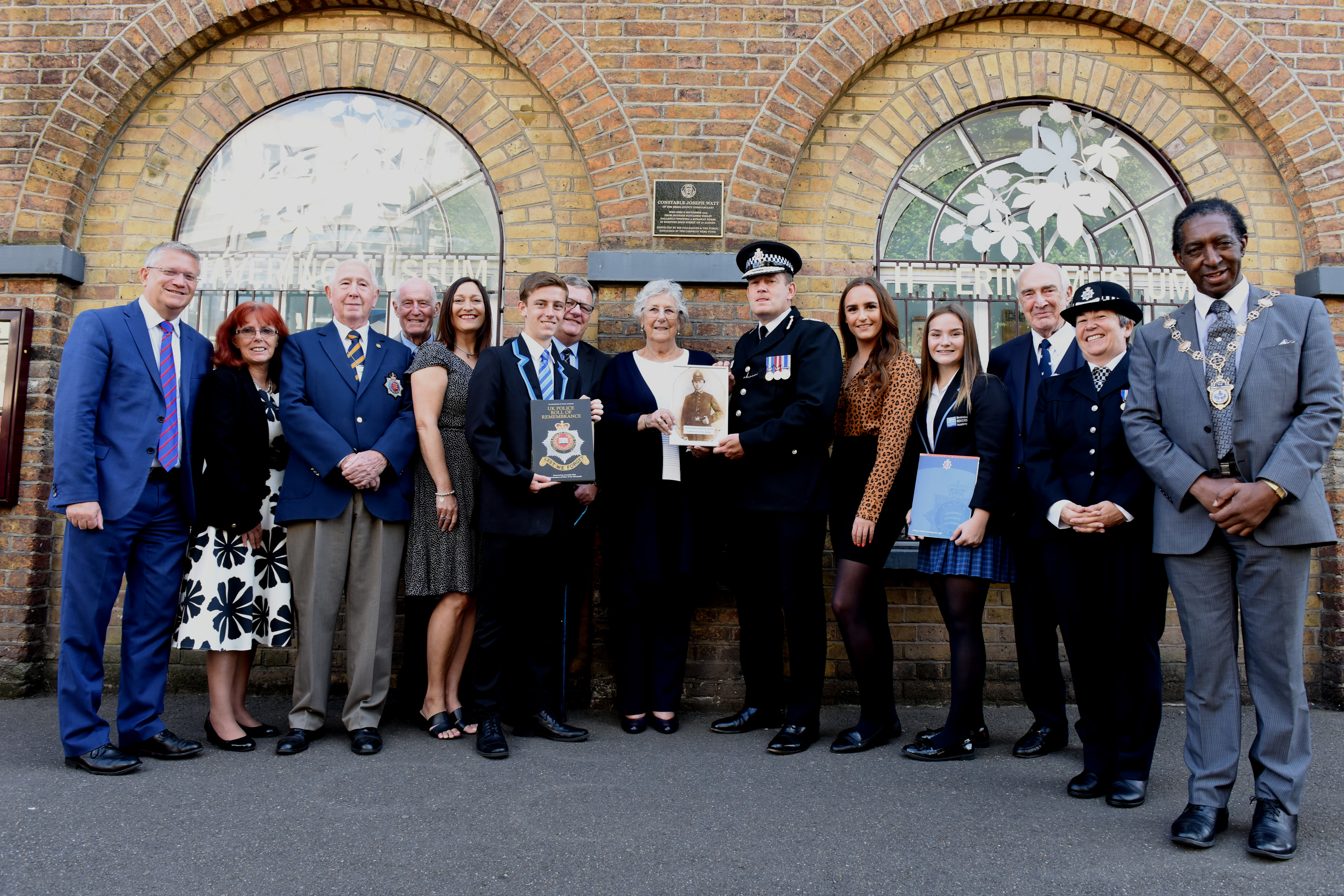
PC Joseph Watts (Essex County Constabulary) passed away on the 8th September 1913 from injuries sustained while gallantly trying to stop a runaway horse in High Street, Romford on 27th August. A plaque to Constable Watts was unveiled outside the Havering Museum on 13th September 2019
1915 ~ Royal Flying Corp - Suttons Farm
Royal Flying Corp airfield at Suttons Farm, Hornchurch opened on 3rd October 1915 with 8 men and two BE2c aircraft. On 31st December 1919, farmer Tom Crawford took possession again as the base closed. In the meantime it had been the scourge of the airships that had attacked civilian targets, effectively eliminating them as an aerial weapon. In July 1923 it was compulsory purchased by the air ministry for a new airstrip.
1916 ~ William Leefe Robinson
William Leefe Robinson won the Victoria Cross on 2nd September 1916 by being the first airman to bring down a German airship. He was a prisoner of war in Germany 1917-18 and succumbed to his bad treatment there after his return to England, to die in the Spanish flu epidemic.

1916 ~ Explosion at Fields Factory
At 2:57pm an explosion ripped through the Fields factory killing 7 men and injuring 80. Formerly a manufacturer of soap and candles, Fields was taken over in 1914 by the War Department and began making a TNT substitute called dinitrophenol. At approximately 2:50pm a fire was discovered in the nitrate of soda drying room. Attempts were made to put it out and several workers started moving the barrels of explosives into the open, but works chemist said "that the dinitrophenol will explode directly". Captain Church, supervising the removal of the barrels, ordered everyone to get away from them and chased the workers off. At 2:57pm an explosion ripped through the Fields factory killing 7 men and injuring 80. It is thought the death toll would have been higher had it not been for Captain Church's actions. The explosion was attended by several local fire brigades including Romford Fire Brigade led by Captain Samuel Davis (of Dowsing & Davis Builders and Undertakers). They arrived with the factory well ablaze, "their equipment comprising wet cloths to aid breathing, a whistle and a hank of rope to keep them together, enabled them to remove twelve young women who all survived. Minutes later the factory was blown hundreds of feet into the River Thames". Altogether they rescued 69 people, for which six of the fire crew were awarded OBEs by the King.
1917 ~ Murex Iron Foundry
Murex Ltd. were Iron founders & ferroalloy manufacturers who arrived in Rainham in 1917, Murex,
the
company which would come to
dominate Rainham's industrial waterfront in later years, moved to Rainham Ferry. Founded in 1909 in
Millwall, the start
of WW1 became a great opportunity for Murex to expand. Their work with tungsten and wolfram with
permission to
manufacture ferrotungsten and tungsten powder meant they needed new premises. A contract to smelt
600
tons
of tungsten
ore concentrate for munitions led them to purchase the site at Rainham next to the [damaged Fields
factory](https://www.tiki-toki.com/timeline/entry/1145867/Havering-Timeline/#vars!panel=11880958!)
(see 14th September 1916) for £60,000.
1920 ~ Peter Blundell
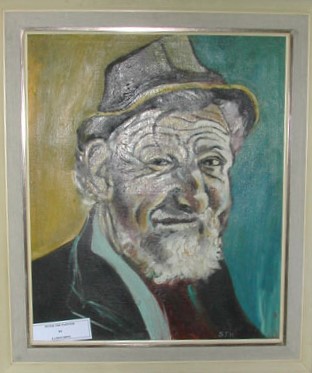
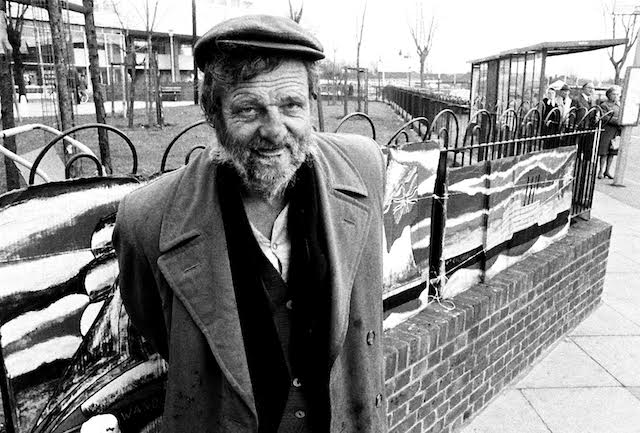
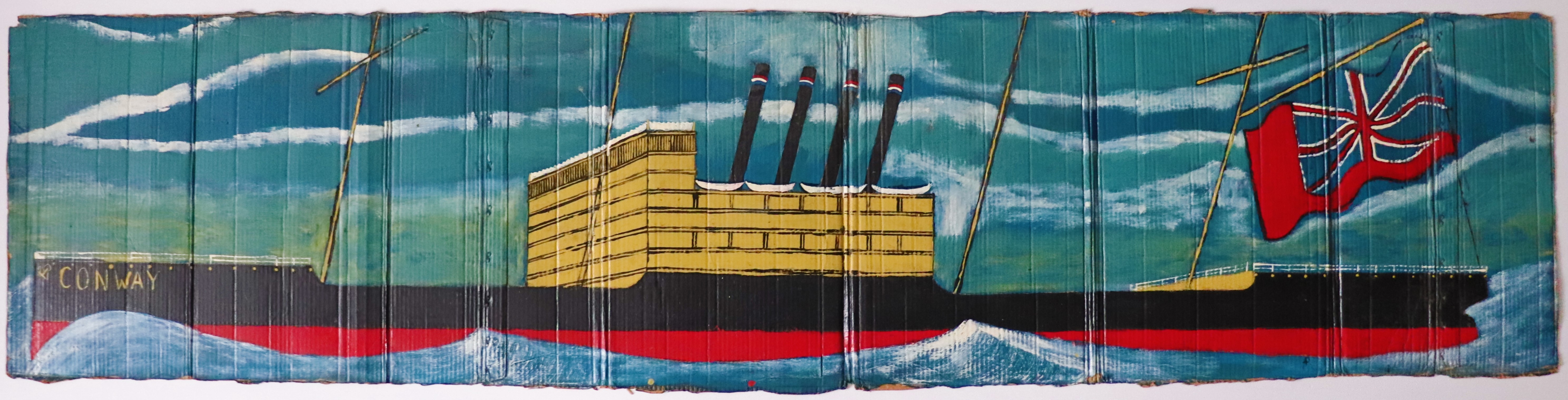
Peter Blundell was a tramp who at one time lived in a sand bin on the A127 Southend Arterial Road underneath the Hall Lane flyover where he often displayed his paintings of ships. He was a very familiar sight in Romford and is renowned for his paintings of ships on pieces of cardboard which he displayed outside the Central Library in St Edward's Way, Romford. An article in the Romford Recorder of 18th April 1975 includes a photograph of him clean shaven during a stay in Harold Wood Hospital. At the time of the article he was 55 years old and he had been in the hospital for six weeks. Doctors were appealing for a home for him and were reluctant to discharge him from hospital until he had somewhere to go. Mr Blundell was reported as saying "All I want to do is live for a long time. If that means retiring from the road then that's what I will have to do. I don't want to be a nuisance but I want to do what the doctor advises". He was born on January 10th 1920 in Norwich and was the second oldest in a family of four, with three sisters Mary, Margaret and Ann. He lived with his family in Billericay and Romford before joining the Merchant Navy - his father, grandfather and great-grandfather all served in the Royal Navy. Henry, his father, retired as a lieutenant commander and was awarded an MBE. Following a marriage which broke up he took to the road. On January 5th 1987 he was admitted to Harold Wood Hospital on the advice of London Borough of Havering Social Services staff after complaining of feeling unwell. He had twice refused medical help from social services and the police. Peter Blundell died on Wednesday January 23rd 1987 in Harold Wood Hospital aged 67. His sister Margaret revealed that his family had often tried to get him to live with them but that he chose to live rough. She organised his funeral which was attended by family and people who knew him from Havering. His cremation took place at Chelmsford on 27th January and his ashes were buried in Stock churchyard.
Donated by S J Hitchen
1920 ~ The Rainham War Memorial
The Rainham War Memorial was built in 1920 by a Mr. Vinton. It was unveiled by Colonel Sir Francis Douglas Charlton Whitmore (1872 - 1962) on 7 November 1920.

1921 ~ Royal Liberty School
Opened in the former Hare Hall as the Romford County School for Boys.
1922 ~ Essex Sewer Commission Notice
1924 ~ Oldchurch Hospital
Oldchurch Hospital was built around the core of the Romford Union Workhouse. It was demolished in 2007.
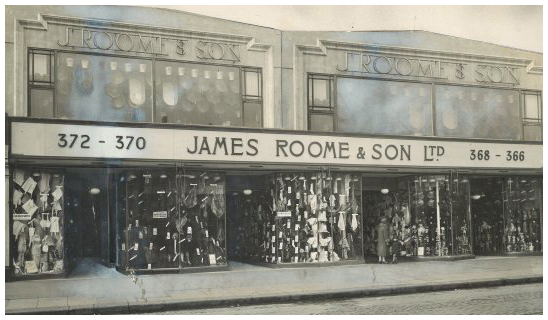
1927 ~ Roome's Department Store
The original general store, managed by James Roome, opened 1888 in Green Street, Upton Park. The family moved to Upminster in 1906 and acquired the site in 1925 for a new shop which opened in 1927. The department store continued to expand around the original store in Station Lane.
1928 ~ Ivor Cameron
Ivor Cameron, a founder-member and long-serving Director of Havering Museum. Ivor made invaluable contributions to the Havering Museum for many years, but also served the people of Havering in various capacities since he was to the Council in 1990 and represented Hacton Ward for 16 years before standing down in May 2006. As a Councillor, Ivor served on Havering's Corporate Services, Development and Transportation, Education, Environment and Licensing and Governance Committees. In 1996, Ivor was awarded a Paul Harris Fellowship by the Dagenham Rotary Club for his tremendous services to the community. He also elected Mayor of Havering from 1996-1997.
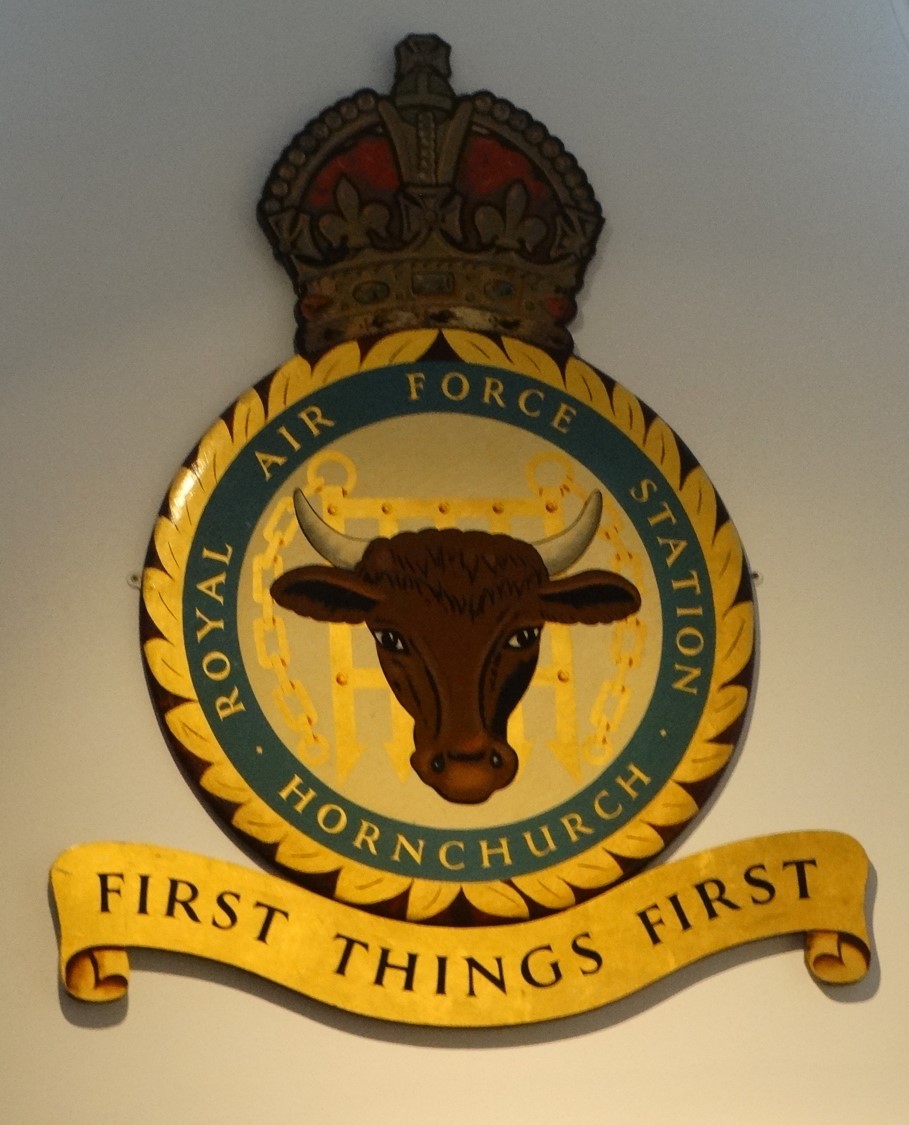
1928 ~ RAF Hornchurch
RAF Hornchurch opened at Suttons Farm on 1st April 1928 under the command of Squadron Leader Keith Park, to become one of the principal fighter bases for Sptifires in World War II. The base closed on 9th April 1962.
1928 ~ Maylands Aerodrome
In 1928, Mr A H Matthews leased the land as a private landing strip for his own plane and the 4 planes owned by Inland Motor Services Ltd. From 1931 to 1934 the airfield was the base of Hillman's Airways but they soon outgrew the airfield and moved to Stapleford Tawney. in 1936 it was sold to a consortium for a proposed golf course but continued to operate as an airfield for another 4 years. At one time it was the only permanent aerodrome in Essex. on 6th February 1940 the aerodrome was burnt to the ground, allegedly during a German Air Raid ....but other theories as to the cause of the fire exist. From the this date it ceased to operate as an airfield and with the exception of an emergency landing by a Hurricane low on fuel on the 18th October 1940. After the war Maylands Golf Course was developed on the land of the former airfield.
1929 ~ Capitol Cinema, Upminster
On the corner of St. Mary's Lane and Tudor Gardens the Capitol opened on 10th October 1929. In April 1937 it was taken over by Eastern Cinemas and on 28th February 1943 it was taken over by the Odeon chain. On 19th August 1946 it was renamed the Odeon on 29th August 1949 renamed the Gaumont after being taken over by the Rank Organisation. On 15th July 1961 it ceased to be a cinema. in 1973 the building finally closes for good after being Top Rank Bingo Club since it stopped being a cinema. The site was rebuilt in 1974 as a supermarket and went from Wallis to Somerfield to Waitrose (2015).
1929 ~ Havering Road Infants School
Opened as Havering Road Infants School from 1929 -1931. It under went various name
changes during the years and was know
variously as Havering Road Mixed Junior School, Havering Road County Primary School and it became
Parklands Infant and
Junior Schools in 1957.
These extracts of text have been taken directly from the Junior School's log books which were
handwritten and start in 1931 and run through till the early 1980s.
1930 ~ Kenny Ball
Jazz trumpeter and band leader Kenneth Ball was born in Ilford, and moved moved to Emerson Park in 1968, where he lived for many years. His band, 'Kenny and his Jazzmen' performed regularly at the Queens Theatre in Hornchurch and had a string of hits including Samantha, Midnight in Moscow, and When I'm Sixty-Four. In 1981, they performed at Buckingham Palace for the wedding reception of the Prince and Princess of Wales, which Kenny described as the peak of his career. Kenny's last appearance with his band was in Germany in JAnuary 2013; he died of pneumonia two months later. His son Keith has now joined the band as its lead singer to keep the Jazzmen legacy alive.
1932 ~ Ian Wilkes
Married to Pamela, Ian formed Friends of Havering Museum in 2000 to start the campaign to launch Havering Museum. With Pamela, as company secretary, the group successfully gained Heritage Lottery Funding for almost £1million and then arranged an agreement with Havering Borough Council to take over part of the old Romford Brewery Building in the High Street. It was a proud day for Ian when he officially opened the Museum on 26th May 2010. Ian was Chairman of the Board of Directors until 2014 when he stood down through ill-health. Apart from his strong association with the Museum, Ian was a successful author and publisher. In 2013 he received a Civic Award from the Mayor in recognition of his long and dedicated service to the Borough. He was also Chairman of Romford and District Historical Society, Chairman of the Chameleons Drama Group, a Governor of Frances Bardsley and several other local Schools and served two terms as an elected Councillor for the Residents' Association. Ian leaves Pamela and four sons and an enormous legacy both at Havering Museum and the Borough to be proud of.
1934 ~ Harold Wood Cricket Club
In 1934 Edward Bryant, a local landowner, donated a field to the Hornchurch Urban District Council on the condition that it would be used for cricket.
1934 ~ Upminster Bridge Underground Station
Upminster Bridge Underground Station is opened. The station on what is now the Distric Line was opened on 17th December 1934 by the London, Midland and Scottish Railway. The name was chosen by survey over the alternative "Minster Way."
1935 ~ Towers Cinema (later Odeon Hornchurch)
With seating for almost 1800 the cinema was built for David James and designed by Edward Kemp & Frederick Tasker. The cinema included a small stage and a 200 seat ball room and cafe on the first floor. It was sold in 1937 to Eastern Cinemas Ltd. in 1937who sold it on to the Odeon chain in 1943. It closed as a cinema in 1973 and was converted into a bingo hall which remained open till 2015. In April 2017 it was demolished to make way for a supermarket which was built on the site.
1935 ~ Elm Park Garden Suburb Underground Station
1935 - Elm Park Garden Suburb Underground Station is opened, to serve a "country town" of 7,000 homes.
1936 ~ Havanah Cinema (later Odeon Romford)
Opening on 29th January 1936 the cinema w designed by Edward kemp and Frederick Tasker. It was sold to Eastern Cinemas Ltd in April 1937 and then on to the Odeon chain in 1943. It changed it's name to the Odeon on 28th November 1949. In 1974 it was converted to a 3 screen complex but finally closed on 8th July 1990 with a new 8 screen cinema opening in the nearby Liberty 2 shopping centre. Following the closure as a cinema it became a venue for the Laserquest game for a period but then remained empty till 1999 when it became 2 night clubs, Time and Envy, these later became Fiction and Cameo.
1937 ~ Cheetah Racing at Romford Greyhound Stadium
In an attempt to increase attendance at the race meetings cheetah racing was introduced to the crowds at Romford greyhound Stadium by Arthur Leggett. In the first race at Romford to feature cheetahs, Helen, a female cheetah easily won against the greyhounds . With a track record of 15.86 seconds to cover the 355 yards at around 55mph she left the dogs behind her. In the long run the cheetahs proved a bit unreliable at chasing the hare and these novelty races didn't continue for long. Sport
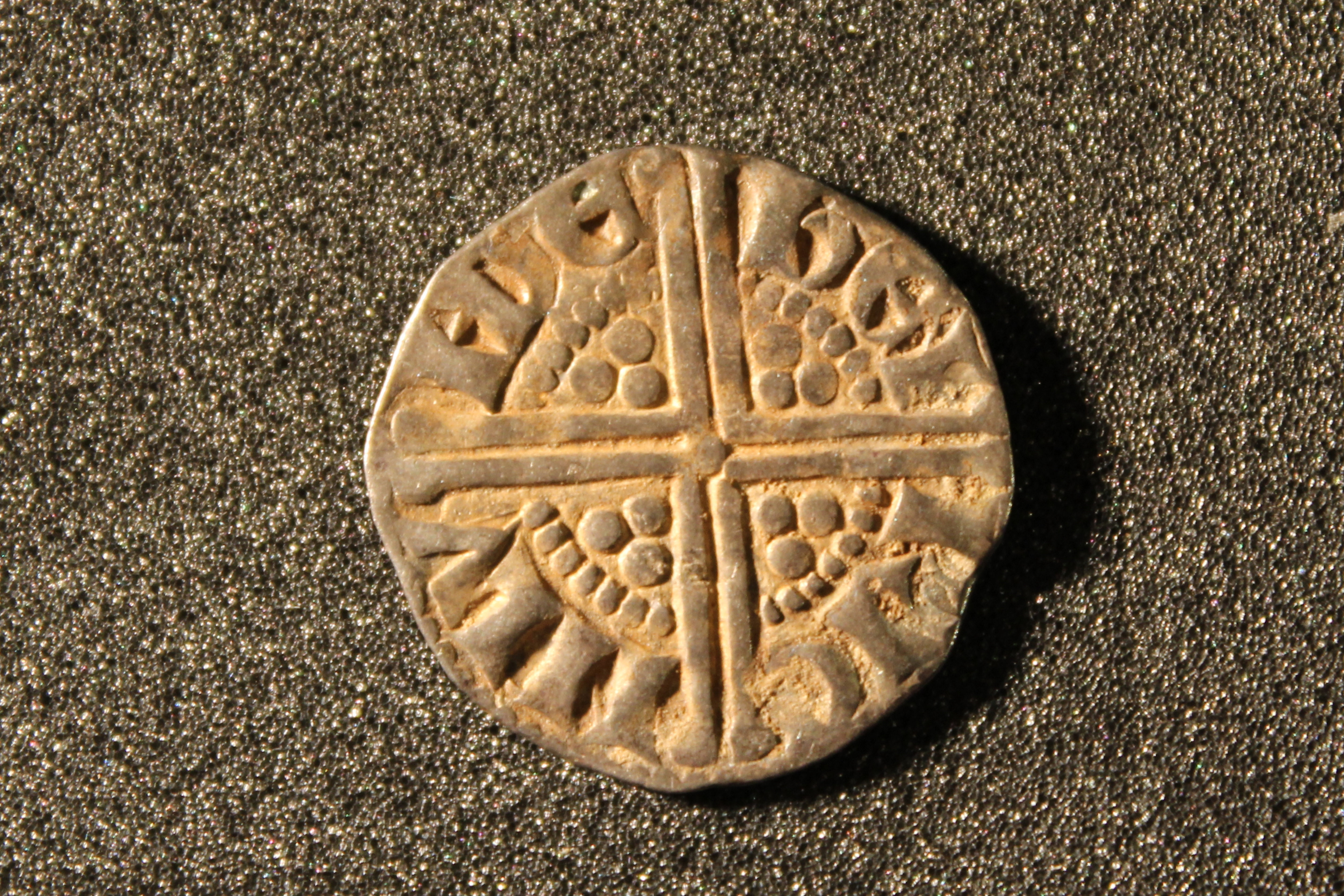
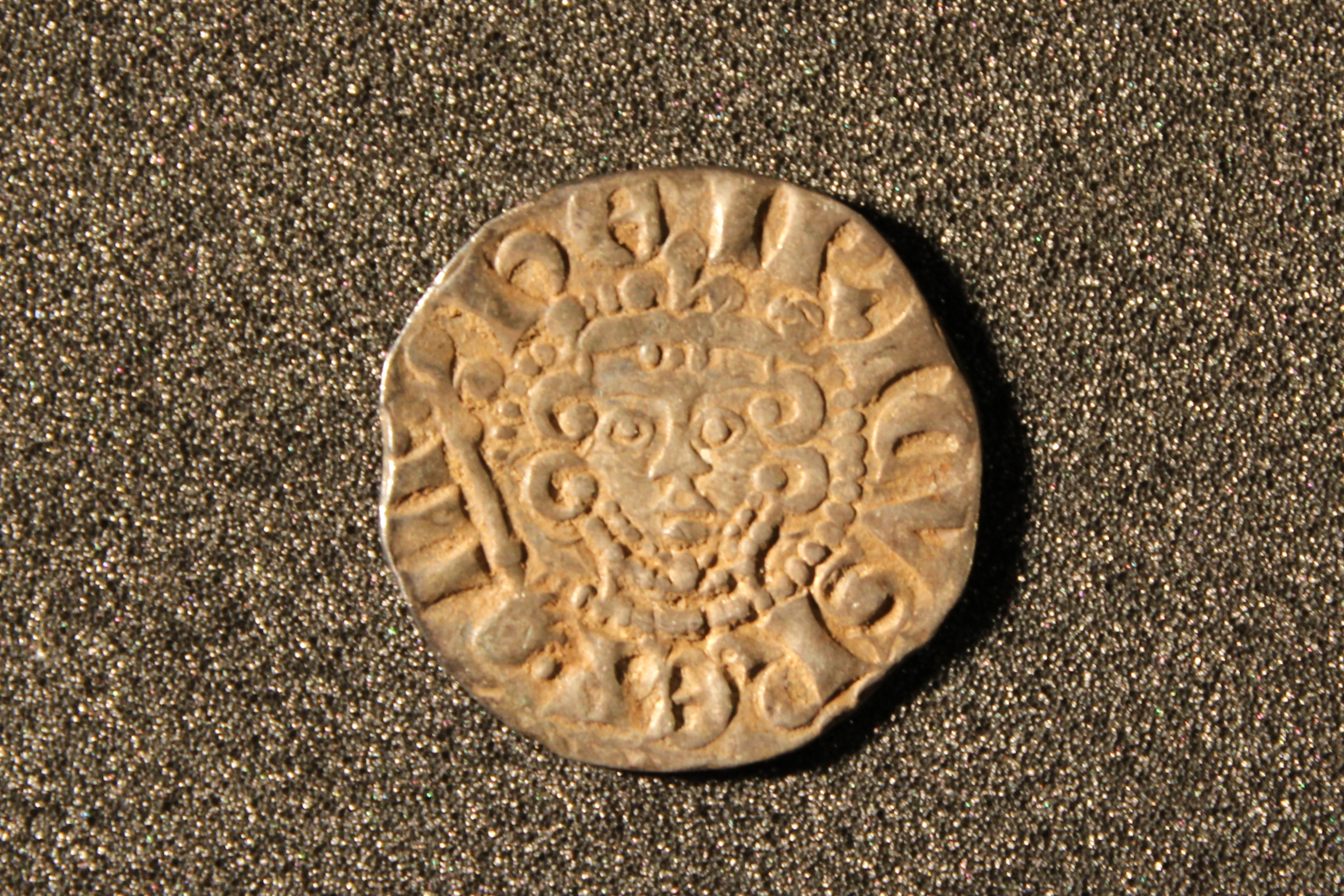
1938 ~ Hornchurch Hoard
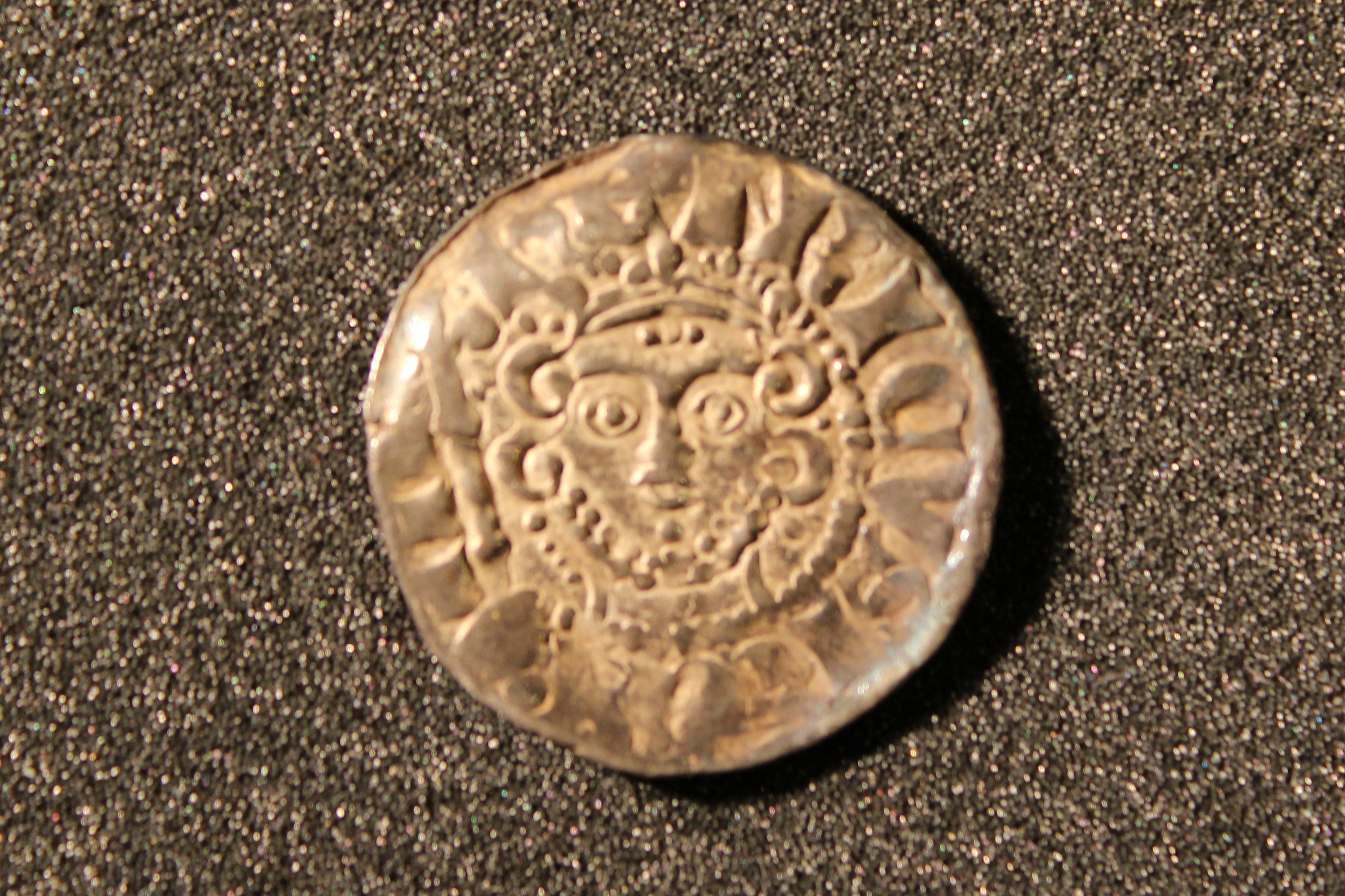
The Hornchurch Hoard of 448 silver coins was discovered in 1938 opposite St. Andrew's Church in Hornchurch. The hoard, which was probably deposited around 1265, contained a total of 448 coins dating from 1223 — 411 of which were of the voided long cross series of Henry III, with the remainder being Scottish, Irish, short cross, and forged coins.
1942 ~ Warship Week
Warship Week in February 1942 saw local communities raise funds to pay for building warships. These communities then 'adopted' the ships, writing letters to crews and sending them knitted balaclavas, gloves, and socks. The crews would also pay visits in return. Romford sponsored HMS Raider and Hornchurch adopted HMS Hurricane.


1942 ~ Ian Dury
Although born in Harrow, Middlesex, singer and songwriter Ian Dury would later claim he was born in Upminster. In 1946, he moved to 90 Front Lane, Cranham, with his mother Margret, and attended Upminster Infant School. In 1949, they moved to 12 Waldegave Gardens in Upminster; as several relatives shared the house, Dury slept in a caravan in the garden, which he loved. Dury found fame in the 1970s and 1980s as the lead singer of 'Kilburn and the High Roads' and later 'Ian Dury and the Blockheads'. His 1981 solo album Lord Upminster pays homage to the childhood home he remembered so fondly.
1943 ~ Raimund Sanders Draper (1913-43)
An American volunteer in the RAF lost his life when the engine in his Spitfire failed on take-off from RAF Hornchurch. Born 27th December 1913 in London, he moved to Manhattan, New York, USA. Although still living in New York, he joined the RAF as a volunteer pilot in 1940. On taking off from RAF Hornchurch on 24th March 1943, he experienced engine problems with Suttons Junior and Senior Schools in the direct path of his Spitfire. Rather than bail out and risk his plane crashing into the school, he crash-landed on the school field, which the plane skidded across, coming to rest against the wall of one classroom. Despite the school being full of pupils, only one 13-year-old was injured by flying glass from one window.
1944 ~ Joseph Holt
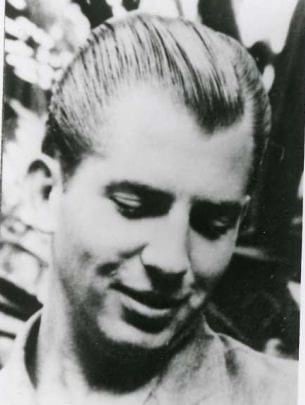
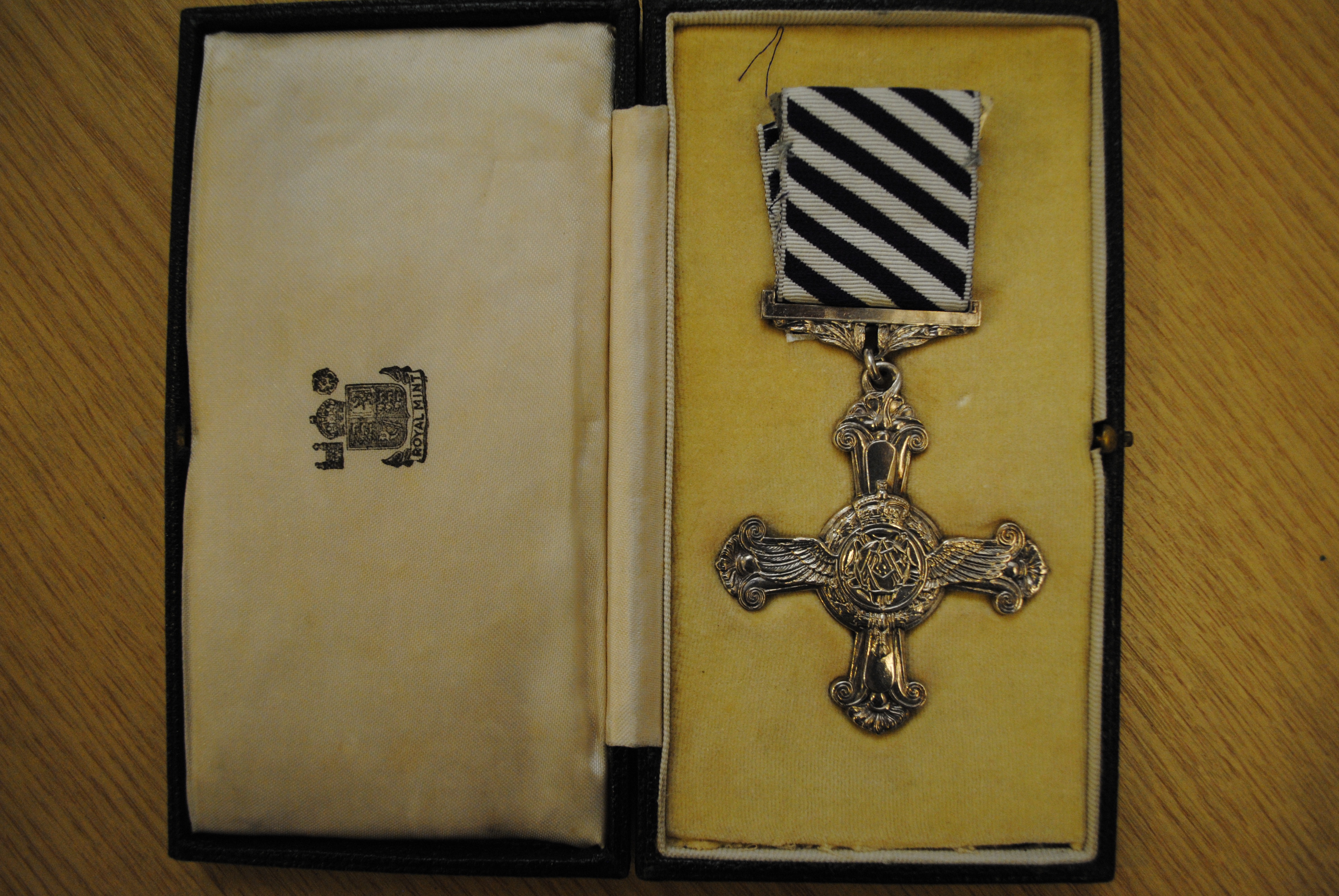
Joseph Holt was born in Romford on 1st May 1924. He was awarded the Distinguished Flying Cross in November 1944 for "the utmost fortitude, courage, and devotion to duty." His war medals and records are now displayed in the Havering Museum. Holt survived a bombing raid in 1940, enlisted in the RAF Volunteer Reserve in 1941, flew 36 operational flights, married Josephine in 1943, and was demobilized in 1946. He later emigrated to Canada, passing away in 2012.

1924 - 2012
1947 ~ Gidea Park rail crash
The Hughley Mail train crashed into the rear of a Southend-bound train in thick fog. The inquest found a "serious error of judgement on the part of the driver" of the mail train passing a signal at danger, but also questioned the inconsistent evidence of the Romford emergency fog signal man over the use of warning track detonators.
1947 ~ Harold Hill estate begins
850 acres of Dagnams Farm were acquired by the London County Council. The Harold Hill estate was proposed in Abercrombie's 'Greater London Plan', 1944, as a 'quasi-satellite town'. Building began in 1948-1954 with 7,631 houses. The shopping centre opened in 1952. Housing architect: S. Howard.
1948 ~ The first house on the Harold Hill Estate
The first permanent house on the new Harold Hill Estate, 44 Gooshays Drive, Harold Hill, was handed over in 1948.
1953 ~ Romford War Memorial Social Club
Officially opened on 11 October 1953 by Lt.-Col Sir Francis Whitemore, the Club commemorates service personnel and civilians from Romford who lost their lives during WWII. Panels were donated by the US Airforce. Restored and reopened in 2012.

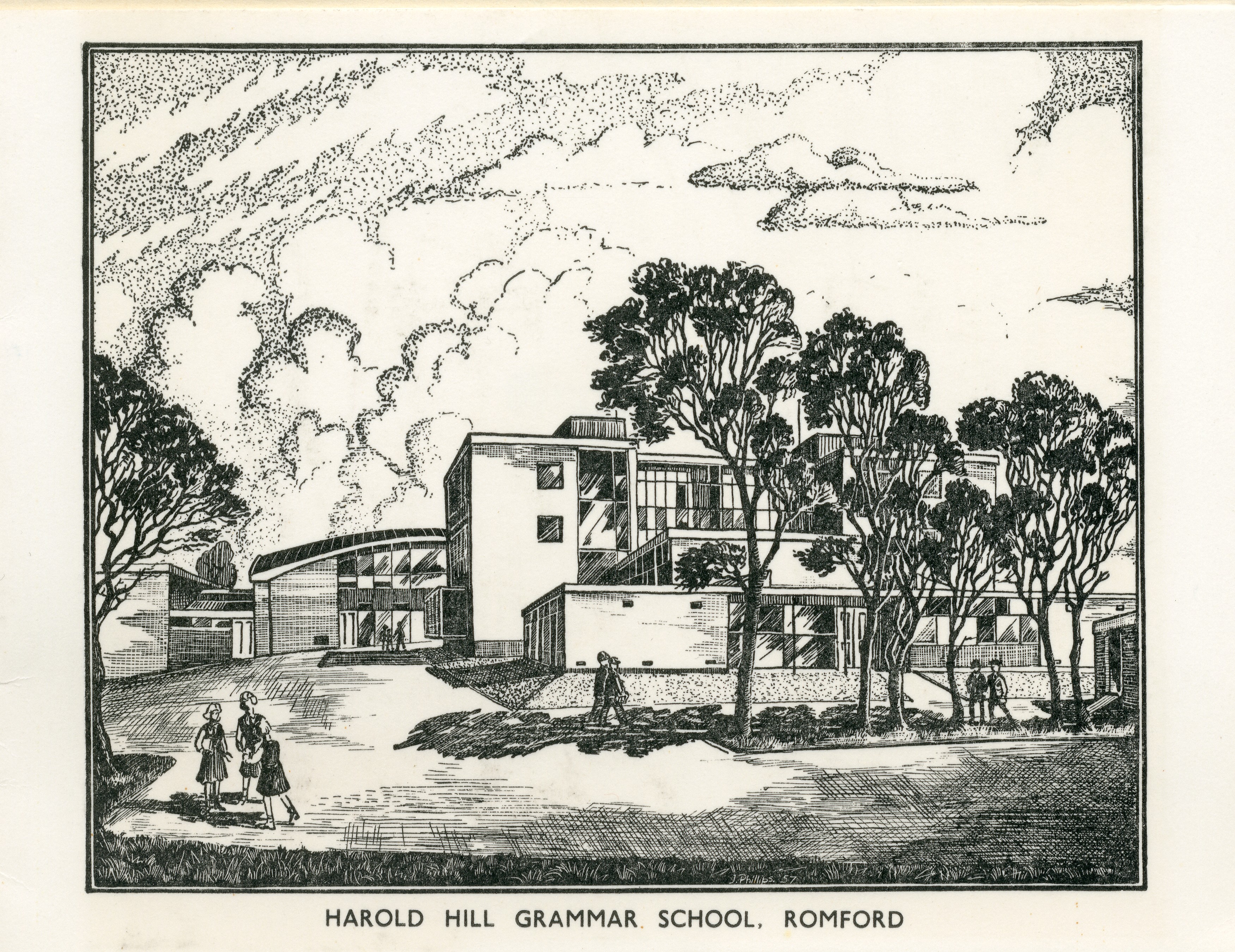
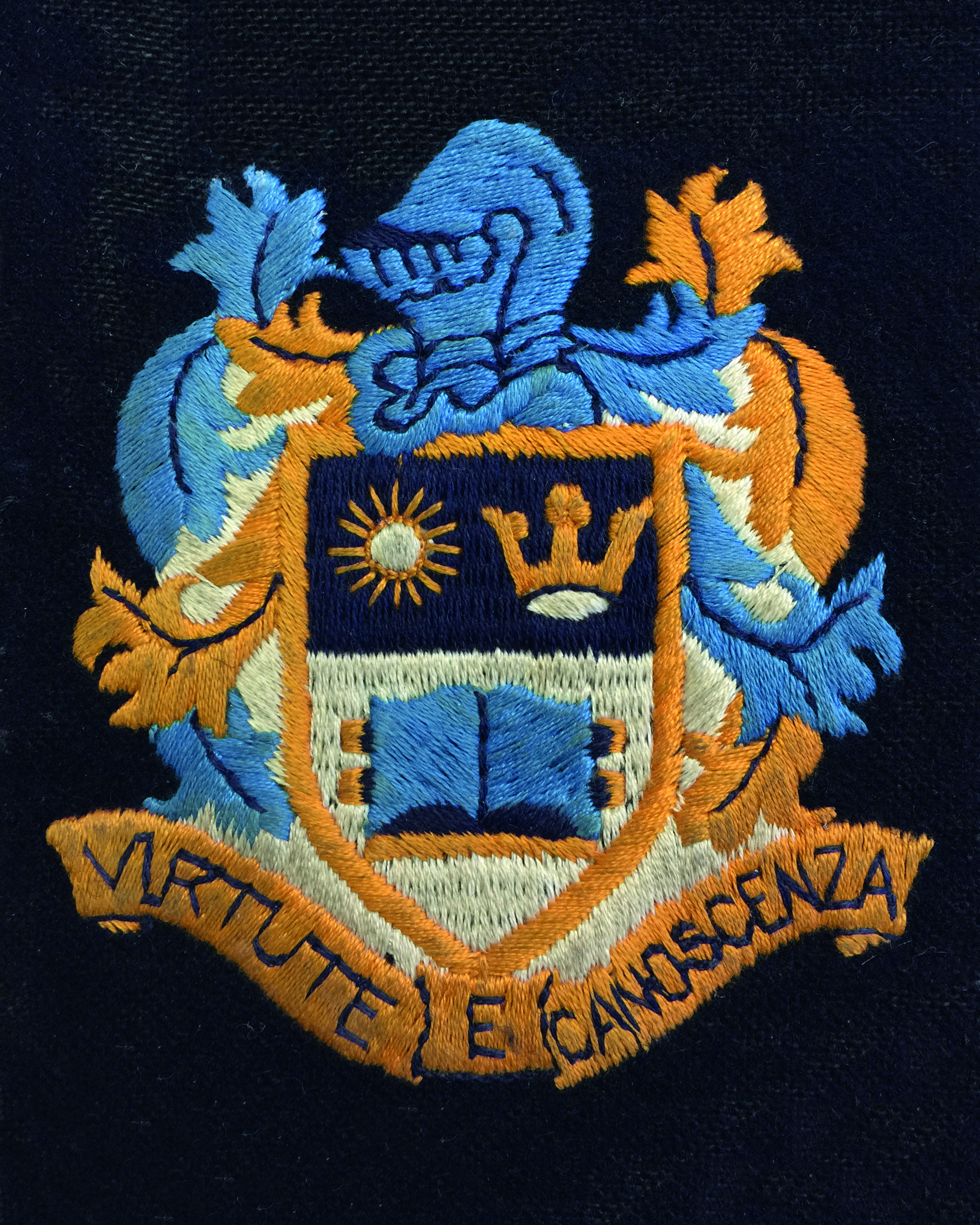
1958 ~ Harold Hill Grammar School
Opened by Geoffrey Lloyd M.P., it remained a grammar school until 1973 when it became Bedfords Park Comprehensive School.
1958 ~ Romford Cattle Market Closes
With the decline in trade, the cattle market, granted its Royal Charter in 1247, closed in 1958. The market continues to open on Wednesdays, Fridays, and Saturdays but no longer sells livestock.
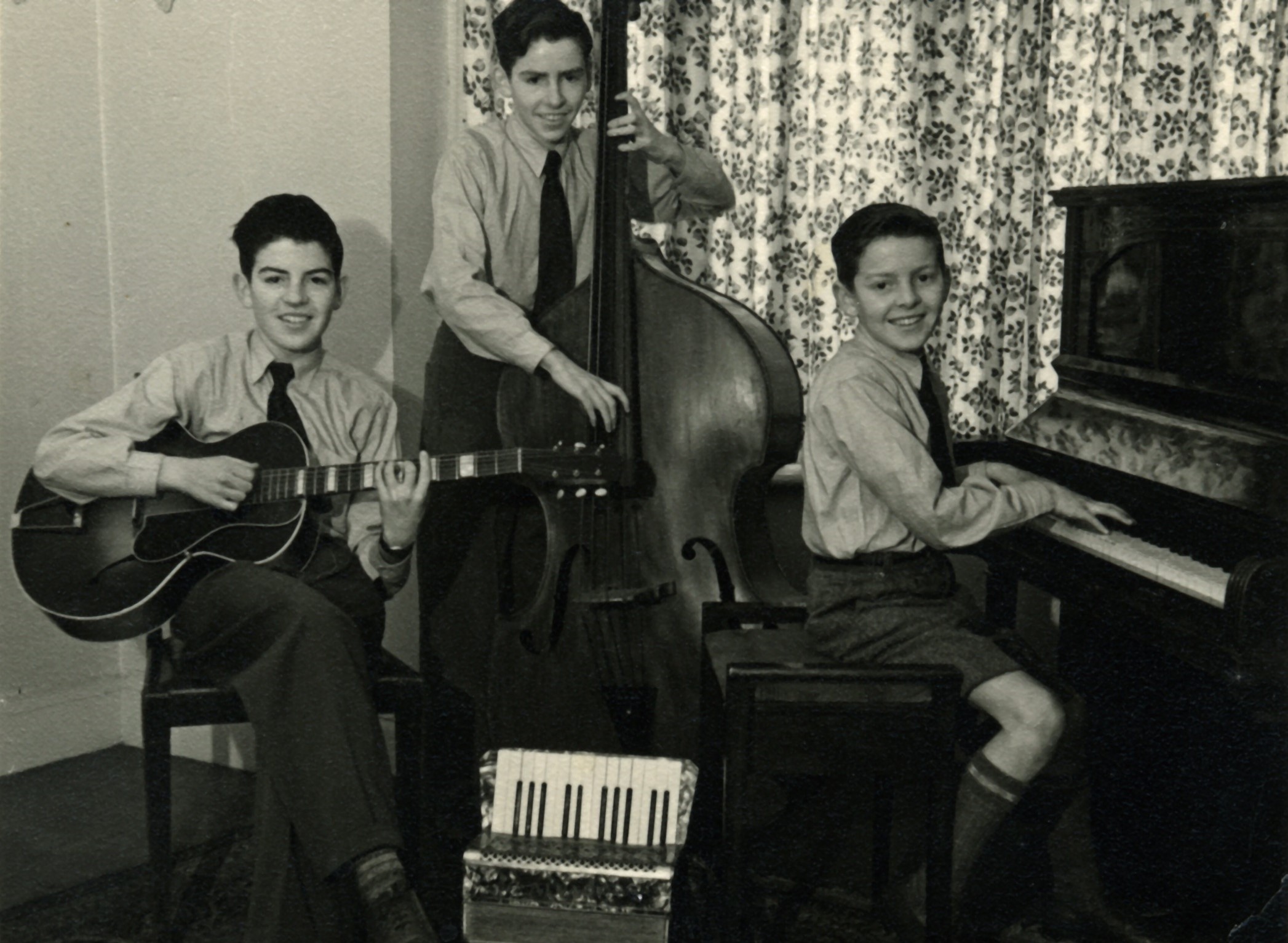
1960 ~ King Brothers
In October 1960, the King Brothers were voted 'Top Vocal Group' in a reader's poll by New Musical Express. The band leader, Denis King, was born on 25 July 1939 in Hornchurch. Their first chart success was a cover of 'A White Sport Coat', reaching No. 6.
1965 ~ London Borough of Havering
The borough was assembled from Romford Borough Council and Hornchurch UDC. Havering's Coat of Arms: Per saltire Argent and Azure a Gem Ring Or set with a Ruby proper. Crest: On a Wreath Or and Azure a Castled Gateway... Badge: A bull's head caboshed proper within a gem ring Or set with a ruby proper. Motto: 'Liberty'.

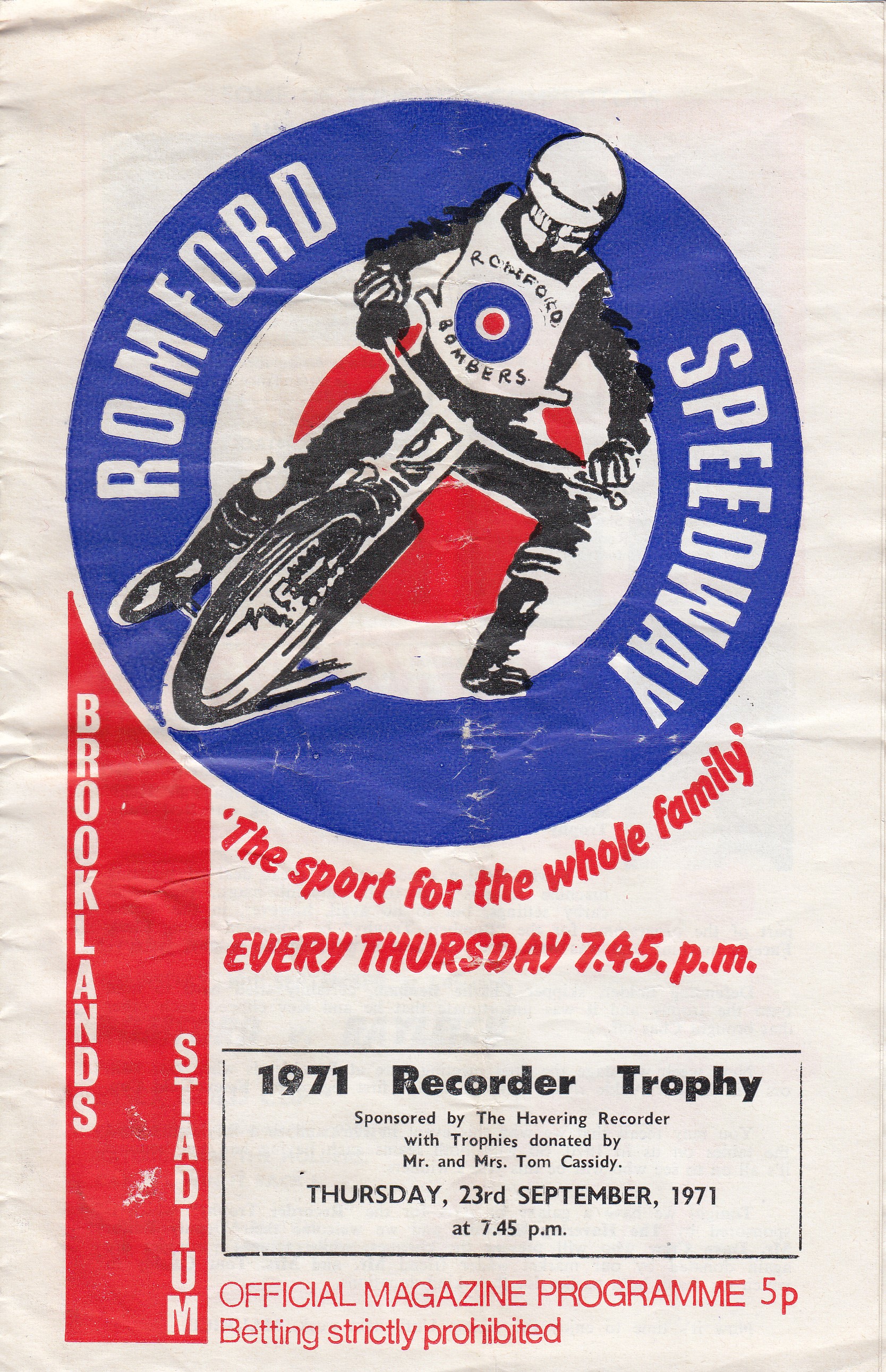
1969 ~ Romford Bombers - Speedway
The short-lived Romford Bombers raced at Brooklands Stadium from 1969 to 1971, running around Romford Football Club's pitch.
1969 ~ Romford Market Place closes to through traffic
The Mayor and Mayoress of Havering ride through Romford Market on a horse-drawn landau to mark closure of the market to through traffic and the opening of the first section of the Romford ring road.
1975 ~ Queen's Theatre
The theatre opened on its current purpose-built site in Billet Lane, Hornchurch in 1975. The Queen's Theatre is a 500-seat theatre located in Hornchurch.

1978 ~ Rom Skatepark
Rom Skatepark is the world's only heritage listed skatepark. The Rom Skatepark was built in 1978 to the designs of Adrian Rolt/G-force, and as from 11th September 2014 is a Grade II listed site. It was agreed to be the best, and most completely preserved, of a small number of purpose-built skateparks to survive from the early years of British skateboarding.

1978 ~ Frank Lampard
Born in Romford, Frank James Lampard, OBE is an English football manager, former professional footballer and children's writer.
1980 ~ Hornchurch Country Park
RAF Hornchurch closed in 1962, and the land was used for gravel extraction until 1980. The Greater London Council then landscaped the area, turning it into Hornchurch Country Park. On 5th October 2015, the Ingrebourne Valley Visitors' Centre opened in the park.
1981 ~ Michelle Suzanne Dockery
Born in Rush Green Maternity Hospital and grew up in Romford. She is most widely known for her leading performance as Lady Mary Crawley in the ITV (UK) television period drama series Downton Abbey.
1982 ~ Dolphin Centre
The Dolphin Centre swimming and leisure facility opens in Romford.
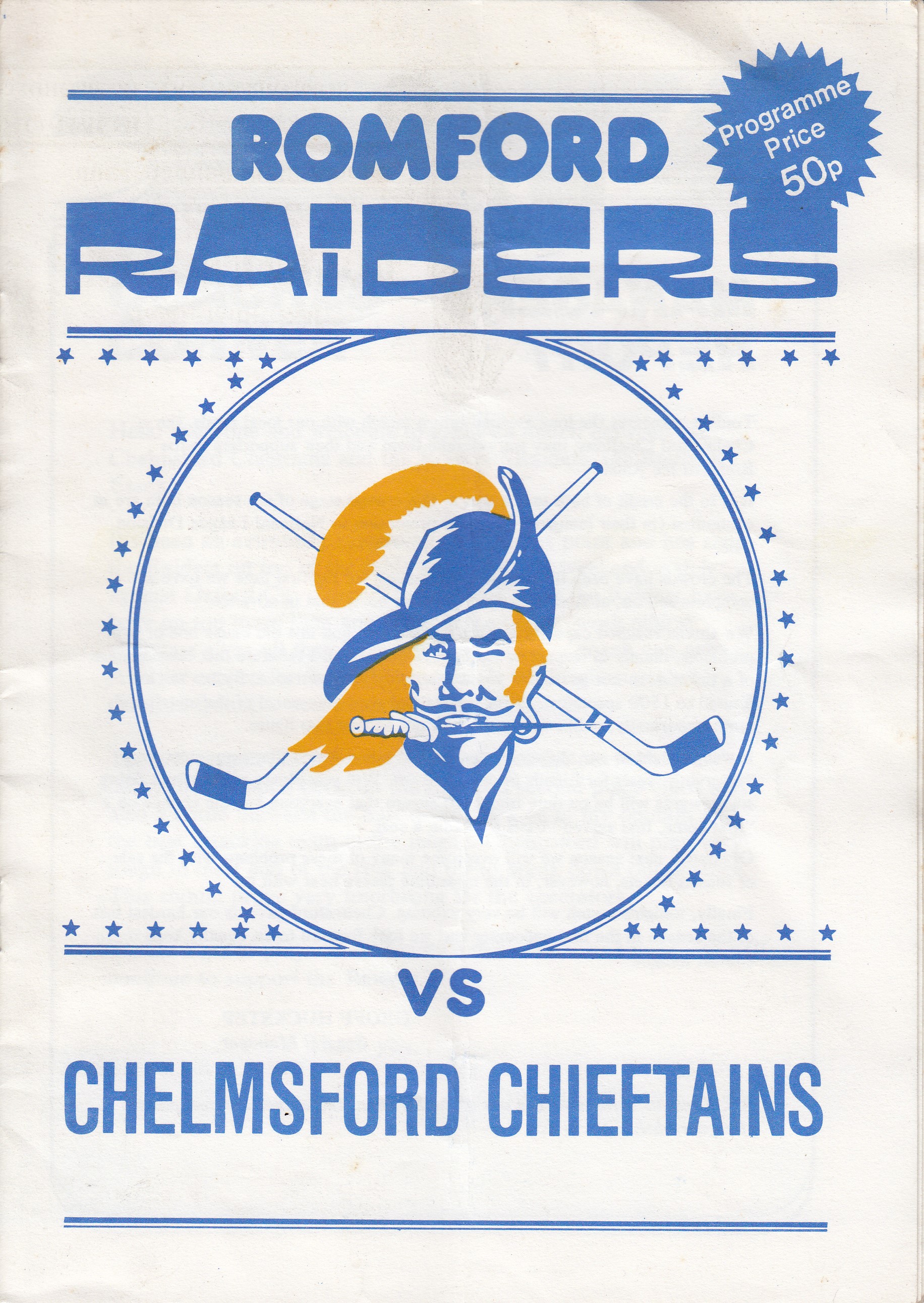
1987 ~ Romford Raiders Ice Hockey Club
The club was founded in 1987 under the name Romford Raiders and coached by Canadian Gord Jeffrey. The Raiders' first ever match was played on 13th September 1987, against the Oxford City Stars. Romford's first captain, Erskine Douglas, also scored the Raiders' first ever goal.
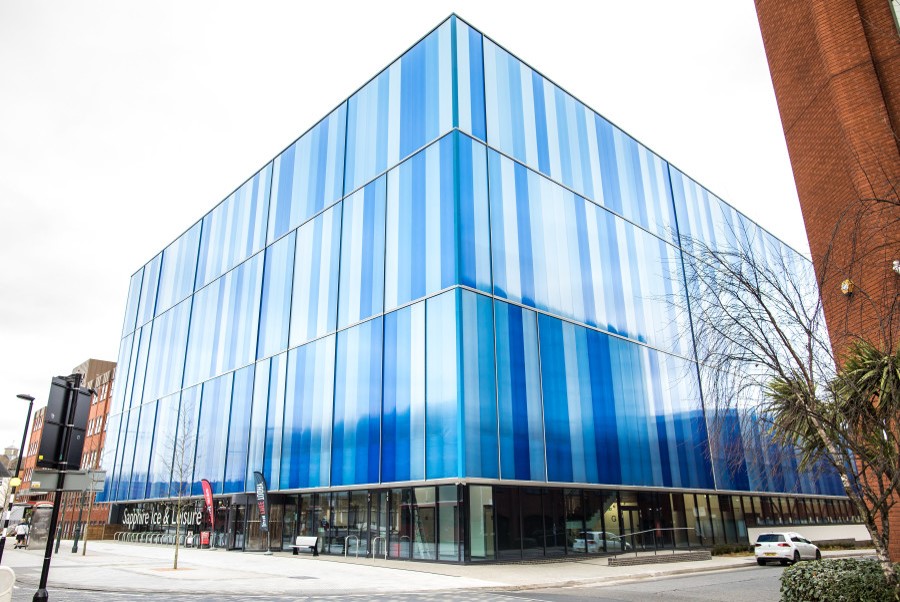
The team iced at Rom Valley Way Ice Rink until 2013 when the council sold off the site. At first it was feared the team would be homeless and forced to disband, but a last-minute agreement with Lee Valley Ice Centre gave them a temporary home where they played under the name of the London Raiders. In 2013, the Romford Ice Arena was sold by Havering Council to investors. The team subsequently had to move to Lee Valley Ice Centre and became the London Raiders. It wasn't until 3rd February 2018 that the Raiders were able to move back to their home town in the newly opened Sapphire Ice and Leisure Centre. After an unsteady start to the game they came from behind to beat Cardiff 5-2 and start a new era of ice hockey in Romford.
1990 ~ Thames Chase Visitors Centre
Walk into the visitors centre and you enter a building created almost entirely of wood, designed by the aptly-named Laurie Wood. It is a reconstruction of the original Centre, which was lost to fire following a lightning strike in 2008.
1990 ~ Havering Street Hockey Club
The history of the club starts in approximately 1987/88 when the Dagenham-based DYNAMIC
DAGGERS was formed. The team, which included players from all over Havering, had some success
in their matches but not in their choice of leader. He had his own agenda, which included
lining his pockets with the club money, leaving the players and their parents out of pocket
and unable to register the team in the league.
At this point the remaining players approached Dave Jordan for help in reforming their team.
Dave not only assisted the players with sponsorship but called together the parents and
formed the BARBARIANS STREET HOCKEY CLUB, with a fully constituted committee. The Barbarians
club consisted of one junior team, one peewee team and one senior team. Shortly after, there
were so many peewee players that a second team was formed — and so the LIBERATORS were born.
The teams had a fairly successful 1988/89 and 1989/90 season. The 1990 season presented the
Barbarian club with a problem: the growing number of teams within the club were all using
different names. It was decided that the club should adopt a neutral name, and so after much
debate the HAVERING STREET HOCKEY CLUB was formed.
In later years the sport decided to adopt the name SKATER HOCKEY instead of STREET HOCKEY, and
this change was reflected by the club when it became the HAVERING SKATER HOCKEY CLUB.
by Steve Reynoldson
1996 ~ The Romford Mosque
The Romford Mosque opened in December 1996.
2000 ~ RSPB Rainham Marshes
Starting in 2000 the RSPB acquired 411 hectares of medieval marsh land in the Rainham area from the Ministry of Defence that had been used as a firing range for the last 100 years by the British Army. RSPB Rainham Marshes environmentally friendly visitor centre opened to the public in 2006 at a cost of £2,000,000. Rainham Marshes protects 411 hectares of ancient, low-lying grazing marsh in the Thames Estuary. Its complex of wet grassland and ditches, together with grassland and scrub, supports many breeding and wintering birds. Wildlife also includes scarce wetland plants and insects, and a key population of the nationally declining water vole.

2006 ~ Queen's Hospital, Romford
Built on the site of the former Oldchurch Park as a replacement for Harold Wood Hospital, Oldchurch Hospital, Rush Green Hospital and St. George's Hospital.
2010 ~ Havering Museum
Housed in part of the old Romford Brewery, the Havering Museum opened on 26th May, 2010.

2012 ~ Brookside Theatre
The Brookside Theatre opened on 23rd May 2012.
The Brookside Theatre Company was formed in 2012 with the aim to bring top quality theatre
productions to the Brookside Theatre's stage and to involve local performers in exciting new
musicals from aspiring international composers and lyricists as well as established modern and
classic productions. The company, headed by the theatre's artistic team, Jai and Harri Sepple,
staged their first musical, Shout The Mod Musical, in May 2012 which marked the
opening of the Brookside Theatre itself.

2012 ~ Olympic Torch comes to Havering
On Sunday 22 July 2012, the Olympic torch (designed by the Barber Osgerby firm) was carried through the borough of Havering, stopping for special events at Romford Market, Queen's Theatre Hornchurch and Rainham Hall. It was carried by nominated people from all over Havering.
2018 ~ Sapphire Ice & Leisure Centre Opens
The new home of the Everyone Active Romford Raiders Ice Hockey Club.
2018 ~ Havering Hoard Discovered
Four hoards have been unearthed in Havering. This has been identified as the largest Bronze Age hoard ever to be discovered in London, the third largest in the UK. 453 Bronze Age weapons have been uncovered dating between c.900 and c.800BC. The objects include axe heads, spear heads, swords, tools and some unusual objects which are rarely found in the UK.